Top 10 Geogrid Fabric Manufacturers for Global Buyers

Choosing the right Geogrid Fabric manufacturer can influence pavement life, slope stability, drainage performance, and project costs. Global buyers often compare tensile strength, aperture structure, polymer type, coating quality, and production consistency. Yet technical brochures rarely tell the complete story.

This guide examines ten established Geogrid Fabric manufacturers serving international markets. It considers product ranges, manufacturing capabilities, quality control systems, certifications, export experience, and application support. Real projects demand more than impressive numbers. A road reinforcement system may face heavy trucks, wet soil, freeze-thaw cycles, or sharp aggregate edges. Small differences in resin quality and installation guidance can become expensive failures.

Performance matters most.

The selection process also recognizes practical buyer concerns. These include minimum order quantities, lead times, packaging, technical documentation, testing reports, and communication across time zones. Manufacturers with laboratory evidence and traceable production records generally provide stronger purchasing confidence. However, no ranking is flawless. Market data changes, regional strengths differ, and a supplier suitable for a highway may not fit a landfill access road. Buyers should verify current certifications, test standards, and project references before signing contracts. Independent engineering review remains valuable, especially when soil conditions are uncertain. This overview offers a structured starting point, not a substitute for site-specific design.
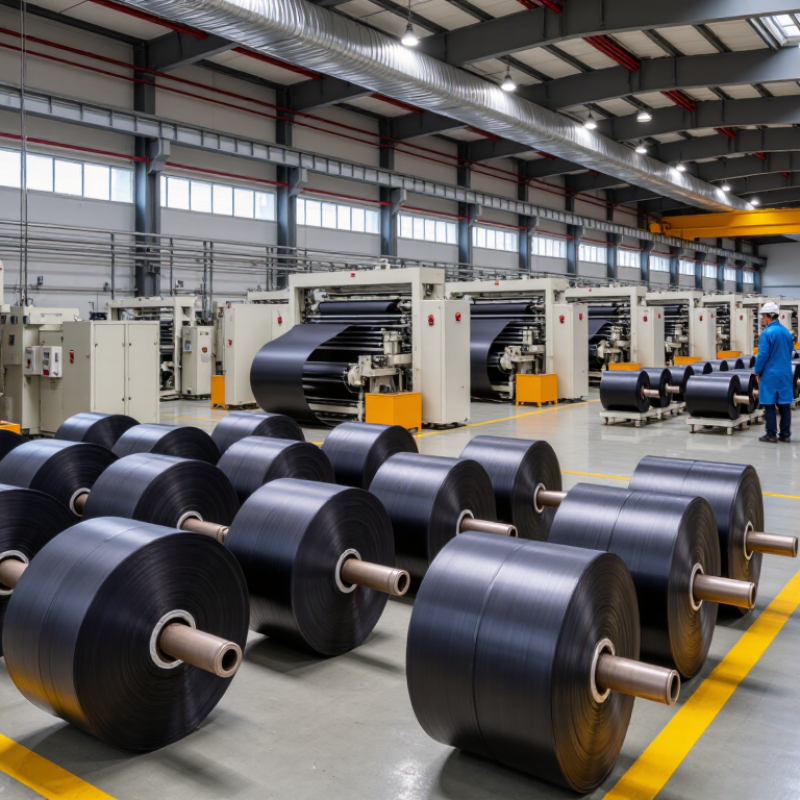
Top 10 Geogrid Fabric Manufacturers for Global Buyers

Geogrid Fabric: Definition, Functions, and Main Applications

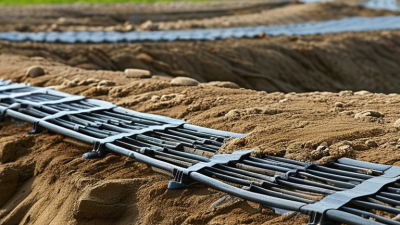
Geogrid fabric is a polymer grid used to reinforce soil, aggregate, and pavement layers. Its open structure creates mechanical interlock with surrounding particles. This helps distribute wheel loads and limits lateral soil movement. Common materials include polypropylene, polyester, and high-density polyethylene. Selection depends on tensile strength, creep resistance, aperture size, and chemical exposure.

The Federal Highway Administration reports that geosynthetics can reduce aggregate thickness and improve service performance in suitable road designs. A 2024 market analysis by Grand View Research estimated continued growth in the geogrid sector, driven by transportation, retaining walls, railways, and landfill construction.

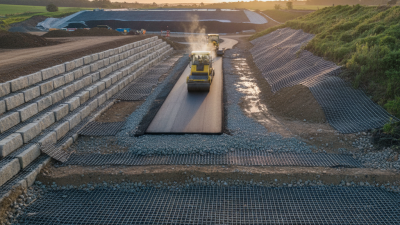
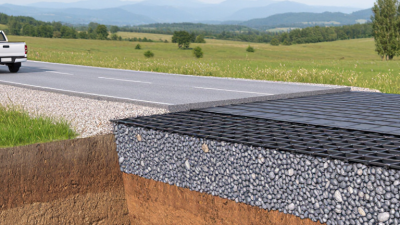
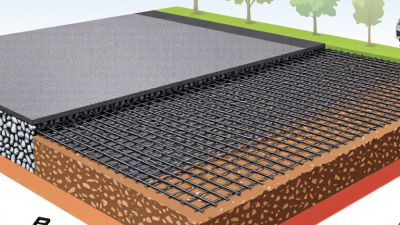
On site, workers may place geogrid beneath crushed stone, where it separates weak subgrade from the compacted base. The effect is practical: fewer ruts, better drainage stability, and improved load distribution.

But geogrid is not a universal repair. Poor compaction, incorrect overlap, or unsuitable soil can weaken the system. Engineers should review loading, installation temperature, moisture, and long-term creep data before specifying a product. Field observations matter. A drawing may show perfect layers, while real soil contains soft pockets and unexpected water. ASTM and local highway specifications provide useful testing frameworks, yet project conditions still require judgment. Some performance claims also rely on laboratory results, not decades of field exposure. That limitation deserves attention.

How to Evaluate Geogrid Manufacturers for International Procurement

Top 10 Geogrid Fabric Manufacturers for Global Buyers

How to Evaluate Geogrid Manufacturers for International Procurement

Global demand makes supplier screening more difficult. Grand View Research estimated the geosynthetics market at USD 13.8 billion in 2023. Its 2024 report forecasts a 6.1% compound annual growth rate through 2030. Market growth does not guarantee consistent geogrid quality. Buyers should compare verified tensile strength, junction strength, aperture size, creep resistance, and coating performance.

Request batch-level test reports, not only attractive brochures. Check whether laboratories follow ASTM, ISO, or EN methods. Confirm test conditions, sampling dates, and product identification. A reliable manufacturer can provide roll labels, production records, and traceability documents. Ask for long-term design data under sustained loading. Short-term tensile results alone can mislead.

Manufacturing evidence matters. Request a factory video or independent audit covering extrusion, welding, coating, and packaging. Compare samples from different production dates. They should look and perform consistently. The Federal Highway Administration’s geosynthetic guidance emphasizes design testing, installation control, and site-specific conditions. Therefore, ask for case data involving similar soil, traffic, drainage, and climate. A supplier quoting only laboratory strength deserves caution. Published market estimates also vary widely, so procurement teams should not treat one report as absolute truth. I would keep a small uncertainty margin for transport damage, installation errors, and incomplete field data.

Top 10 Geogrid Fabric Manufacturers and Their Product Strengths

Global buyers often compare ten leading geogrid fabric manufacturers by product strength, not marketing language. One excels in high-tensile polyester grids for reinforced soil walls. Another focuses on polypropylene grids for road bases and soft ground. A third offers coated fiberglass grids that tolerate asphalt temperatures. Strong manufacturers usually provide consistent aperture sizes, clear technical data, and batch testing records.

Some producers specialize in uniaxial grids for retaining structures. Others develop biaxial products for heavy pavement loads and warehouse yards. A sixth manufacturer may stand out through low-creep materials, supporting long-term embankment stability. Another offers wide rolls, reducing overlaps on large sites. Better suppliers also provide UV-resistant coatings, clean labeling, and installation guidance. Small details matter.

Field experience still exposes weaknesses. A high-strength grid can perform poorly if the soil is badly compacted. A cheaper roll may create waste through uneven edges. One manufacturer may have excellent laboratory results but limited regional support. Buyers should request tensile, junction-strength, creep, and chemical-resistance data before ordering. Independent testing adds confidence. So does checking performance on projects with similar drainage, climate, and loading conditions. No supplier is perfect. Careful comparison remains essential.

Global Standards, Certifications, and Quality Factors for Geogrids

For global buyers, geogrid quality starts with test methods, not brochure claims. ISO 10318 defines geosynthetic terminology, while ASTM D6637 measures tensile properties through wide-width testing. These references make supplier comparisons less subjective. Grand View Research estimated the global geosynthetics market at approximately US$13.8 billion in 2023, with growth expected through 2030. That expansion increases pressure to prove consistency, not merely production capacity. Small details matter.

Request current reports for tensile strength, strain, junction efficiency, aperture stability, and chemical resistance. ASTM D7737 supports evaluation of geogrid junction strength. EN 13249 through EN 13257 address application-specific geosynthetic requirements. Check whether the laboratory follows ISO/IEC 17025 accreditation. ISO 9001 supports process control, but it does not certify field performance. Certificates have limits. Compare lot numbers, resin identification, coating content, roll dimensions, and retained samples. Missing traceability deserves a written explanation.

For roads and foundations, design values should reflect installation damage, creep, temperature, and soil chemistry. Ask for reduction factors and long-term design strength, not only peak tensile strength. Independent testing is stronger when samples come randomly from production lots. Factory audits should review calibration records, extrusion controls, and complaint handling. I would still challenge impressive figures without raw stress-strain curves. Laboratory data may be correct yet poorly applied. Each certificate should match the project specification, local code, and actual ground conditions.

Top 10 Geogrid Fabric Manufacturers for Global Buyers - Global Standards, Certifications, and Quality Factors for Geogrids
No. Anonymous Manufacturer Profile Typical Geogrid Construction Common Polymer or Coating Typical Global Applications Relevant Test Standards to Request Certifications or Compliance Evidence to Verify Critical Quality Factors Recommended Buyer Documents
1 Large-Scale Extruded Biaxial Producer Biaxial punched-and-drawn geogrid with uniform machine-direction and cross-machine-direction ribs Polypropylene (PP) Unpaved roads, base reinforcement, working platforms, parking areas and haul roads ASTM D6637 ISO 10319 ASTM D4355 ISO 9001 quality-management certification; current product technical data sheet; documented factory production control Tensile strength, tensile strain at peak load, junction integrity, aperture geometry, roll width and dimensional consistency Lot-specific test report, production batch number, certificate of analysis, installation guide and packing list
2 High-Modulus Woven Polyester Producer Woven PET yarn grid with protective polymer coating and controlled node construction Polyester (PET) with PVC, acrylic or polymeric coating Retaining structures, reinforced soil walls, steep slopes, embankments and soft-ground reinforcement ISO 10319 ISO 13431 ASTM D5262 ISO 9001; documented creep-reduction factors; environmental and chemical-resistance test records where required Long-term design strength, creep behavior, coating adhesion, yarn linear density, aperture stability and durability factors Long-term strength calculation, creep test data, reduction-factor report, certificate of origin and technical drawings
3 Woven Polypropylene Geogrid Producer Woven PP tape or strip grid, generally supplied as a flexible roll product Polypropylene with protective coating where specified Road-base stabilization, subgrade separation, temporary access roads and aggregate confinement ASTM D6637 ISO 10319 ASTM D4759 ISO 9001; verified raw-material traceability; factory production-control records Rib tensile strength, junction strength, aperture size, resistance to installation damage and roll-to-roll uniformity Raw-material declaration, test certificates, installation-damage assessment and quality-inspection checklist
4 Uniaxial Reinforcement Specialist Uniaxial grid optimized for high tensile capacity in the primary reinforcement direction PET or HDPE, depending on the product design Mechanically stabilized earth walls, reinforced slopes, abutments and embankments ISO 10319 ASTM D6637 ISO 13431 ISO 9001; project-specific design support; documented durability and creep-reduction methodology Ultimate tensile strength, tensile stiffness, interface interaction, connection performance and long-term design strength Design calculation, pullout or interface test data, connection details, durability assessment and installation method statement
5 Heavy-Duty Road Reinforcement Producer High-strength biaxial or composite geogrid designed for construction traffic and heavy aggregate layers PP, PET or composite polymer system Ports, mining roads, airport pavements, industrial yards and heavily trafficked highways ISO 10319 ASTM D6637 ASTM D4355 ASTM D7737 ISO 9001; ISO 14001 environmental-management certification where applicable; documented installation-damage testing High-load tensile performance, junction efficiency, resistance to construction damage, UV stability and chemical resistance Independent laboratory report, project references, UV and chemical-resistance data, shipping inspection report and sample approval record
6 Geogrid–Geotextile Composite Producer Integrated reinforcement grid bonded or laminated to a nonwoven or woven geotextile layer PP or PET geogrid with PP or PET geotextile component Separation, filtration, drainage and reinforcement beneath roads, railways and working platforms ISO 10319 ISO 12956 ISO 11058 ISO 12958 ISO 9001; CE or project-specific declaration where legally applicable; documented factory production control Composite bond strength, tensile properties, characteristic opening size, water permeability and resistance to clogging Full product specification, composite-layer construction details, hydraulic test report and conformity declaration
7 Low-Temperature and Cold-Climate Producer Flexible geogrid formulation selected to retain performance during low-temperature handling and service PP, PET or polymer blend with application-specific coating Cold-region roads, permafrost areas, seasonal construction and freeze–thaw environments ISO 10319 ASTM D4355 ASTM D6637 ISO 9001; documented cold-temperature testing; traceability of polymer grade and coating formulation Low-temperature tensile behavior, flexibility, freeze–thaw durability, coating integrity and installation performance Climate-specific test data, material safety data sheet, polymer declaration, storage instructions and field installation guidance
8 Mining and Industrial Reinforcement Producer Heavy-duty geogrid engineered for abrasive aggregate, high surcharge loading and demanding site conditions High-tenacity PET, PP or HDPE with application-specific protection Mine haul roads, stockpile areas, loading yards, bulk-material storage and industrial platforms ISO 10319 ASTM D6637 ASTM D7737 ISO 9001; ISO 45001 occupational-health-and-safety certification may be requested for major suppliers; site-specific quality plan Installation damage resistance, abrasion resistance, junction strength, creep performance and chemical compatibility Third-party laboratory results, quality plan, nonconformance procedure, batch traceability records and project case data
9 High-Temperature and Asphalt-Interface Producer Geogrid or composite reinforcement designed for asphalt overlays and pavement rehabilitation Glass fiber, polyester or polymer-coated reinforcement system Asphalt overlays, reflective-crack mitigation, pavement rehabilitation and bridge approaches ISO 10319 ASTM D6637 ASTM D6140 ISO 9001; documented compatibility with asphalt binder or tack coat; project-specific conformity documentation Thermal stability, bond strength, coating or impregnation quality, tensile stiffness and resistance to installation damage Asphalt compatibility data, bond test report, application temperature limits, installation procedure and warranty terms
10 Export-Focused Custom-Specification Producer Custom uniaxial, biaxial or composite geogrid manufactured to regional project specifications PP, PET, HDPE, glass fiber or combined material systems International infrastructure projects, public works, flood protection, rail and customized civil-engineering applications ISO 10319 ASTM D6637 ISO 13431 ASTM D4355 ISO 9001; applicable EN, ASTM or ISO conformity evidence; independent inspection when required by contract Specification compliance, dimensional tolerances, long-term design strength, packaging, labeling and export documentation Approved technical submittal, third-party inspection report, certificate of origin, commercial invoice, packing list and bill of lading
Buyer note: Certification requirements depend on the destination market, project specification and intended application. ASTM, ISO and EN test methods should be matched to the geogrid type and verified through current, lot-specific or independently authenticated test documentation.

Pricing, Shipping, and Supplier Selection Considerations for Global Buyers

Global buyers comparing the top ten geogrid fabric manufacturers should examine delivered cost, not only factory pricing. Ex-works quotes can look attractive, but polymer type, tensile strength, coating, roll width, and order volume change the final figure. Request prices under identical technical specifications. Otherwise, the comparison becomes unreliable.

Shipping deserves equal attention. UNCTAD’s Review of Maritime Transport 2023 states that over 80% of global merchandise trade by volume moves by sea. A small documentation error can delay a full container. The World Bank’s Logistics Performance Index 2023 evaluates 139 economies through customs, infrastructure, and shipment reliability. Use these indicators when assessing production locations and ports. Ask suppliers for recent export records, packaging photos, loading plans, and realistic transit estimates. I would not trust unusually low freight quotes without written assumptions.

Tips: Request ASTM D6637 or ISO 10319 test results, batch-based quality records, and a pre-shipment inspection clause. Verify tensile strength at the required strain, aperture stability, UV resistance, and roll labeling. Compare at least three landed-cost offers. A spreadsheet can still miss demurrage, inland delivery, or import handling fees. Supplier selection also needs technical support after arrival. Some buyers overlook this, and the mistake becomes expensive when site conditions differ from drawings.