China Best Geotextile GSM Which Weight Should You Choose?

Choosing Geotextile Gsm can feel straightforward when Chinese suppliers offer weights from 100 to 800 grams per square metre. Yet weight alone cannot tell you whether a fabric will survive installation or provide effective filtration. Details matter. A 200 GSM fabric beneath a garden path faces different demands from material beneath angular drainage aggregate. The right choice depends on soil, loading, installation conditions, and the geotextile’s intended function.

Geosynthetics expert Robert M. Koerner emphasized “design by function” in his reference book Design with Geosynthetics. That principle provides a practical starting point: identify the engineering requirement before comparing fabric weights. For separation beneath aggregate, examine puncture resistance and tensile properties alongside GSM. For drainage, check opening size and water permeability against the surrounding soil. Check the data. Two products with identical weights can perform differently because their polymers, manufacturing processes, and fibre structures differ. Request test reports using relevant standards, such as ASTM D5261 for mass per unit area and ASTM D6241 for puncture resistance.

So, which weight should you choose when sourcing geotextiles from China? There is no universal answer, and that makes a simple purchasing chart imperfect. A lighter fabric may suit some landscaping applications, while demanding construction conditions can require greater installation survivability. These are starting points, not specifications. Be cautious. Even a heavier fabric can disappoint when its filtration characteristics conflict with the soil. This guide examines common weight ranges, practical applications, and supplier documentation to help you make a defensible selection.
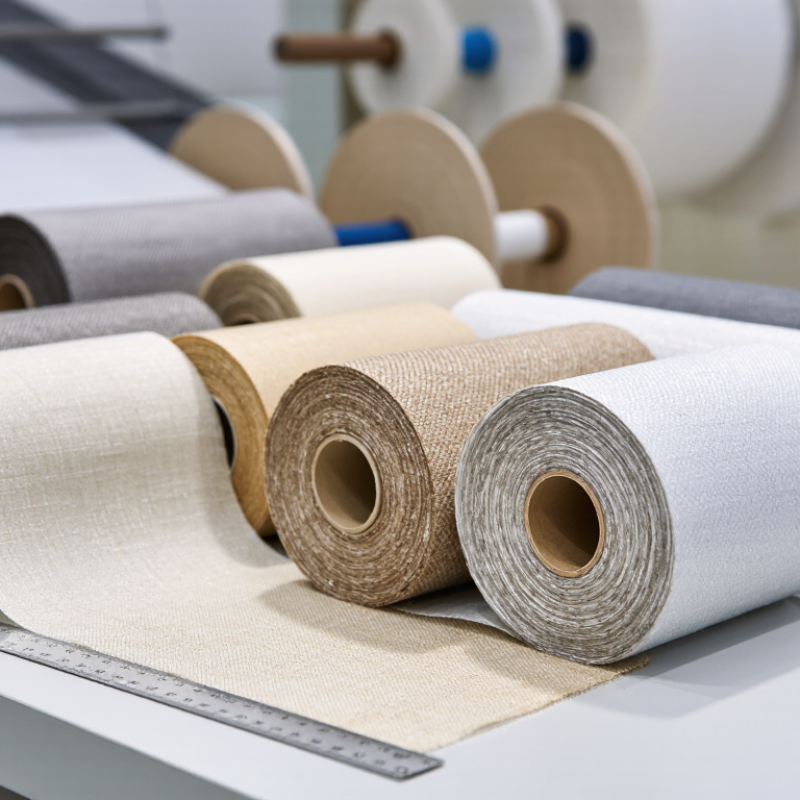
China Best Geotextile GSM Which Weight Should You Choose?

What Geotextile GSM Means and How It Is Measured

Geotextile GSM means grams per square meter, describing the fabric’s mass per unit area. A 200 GSM geotextile weighs 200 grams per square meter under specified test conditions. It measures mass, not thickness. That distinction matters. Two fabrics with identical GSM can have different pore sizes, tensile strengths, and water flow characteristics. Fiber type and manufacturing methods help explain these differences.

To measure GSM, laboratories cut specimens with a known area and weigh them using a calibrated balance. The calculation is straightforward: divide specimen mass in grams by specimen area in square meters. For example, a 100-square-centimeter specimen weighing 2 grams corresponds to 200 GSM. Check the units. Conditioning, sampling location, and specimen quantity should follow the selected testing procedure, such as ASTM D5261 or ISO 9864. Testing several specimens helps reveal variation that one small sample might miss.

When comparing geotextiles sourced from China, request measured mass per unit area alongside the stated nominal GSM. A product labeled 200 GSM may show some manufacturing variation, so check the agreed tolerance and test results. Choosing a heavier fabric can feel reassuring, but that assumption deserves scrutiny. For drainage applications, opening size and permeability may matter more than additional weight. GSM alone leaves important questions unanswered about filtration compatibility and resistance to installation damage.

China Best Geotextile GSM: Which Weight Should You Choose? — What Geotextile GSM Means and How It Is Measured
Geotextile GSM
(g/m²)
Mass per Square Meter
(kg/m²)
Mass of a 100 cm² Specimen
(g)
Material Mass for 100 m²
(kg)
100 GSM 0.100 1.00 10
150 GSM 0.150 1.50 15
200 GSM 0.200 2.00 20
250 GSM 0.250 2.50 25
300 GSM 0.300 3.00 30
400 GSM 0.400 4.00 40
500 GSM 0.500 5.00 50
600 GSM 0.600 6.00 60
800 GSM 0.800 8.00 80

What GSM means: GSM means grams per square meter, also called mass per unit area. A 200 GSM geotextile has a nominal mass of 200 grams per square meter. GSM does not directly measure thickness, tensile strength, or filtration performance.

How it is calculated: GSM (g/m²) = specimen mass (g) ÷ specimen area (m²). A 100 cm² specimen has an area of 0.01 m², so its mass in grams multiplied by 100 gives its GSM. For example, 3.00 g ÷ 0.01 m² = 300 g/m².

Measurement standards: ISO 9864, “Geosynthetics — Test method for the determination of mass per unit area of geotextiles and geotextile-related products,” and ASTM D5261, “Standard Test Method for Measuring Mass per Unit Area of Geotextiles,” describe standardized measurement procedures. Follow the applicable standard for conditioning, specimen preparation, sampling, weighing, and reporting.

How to choose a weight: Select the geotextile using the project’s required function and verified performance. For separation, assess soil retention, permeability, and installation survivability. For filtration, assess opening size, water flow, and clogging resistance. For reinforcement, assess tensile properties and long-term behavior. For cushioning or protection, assess puncture resistance and protection performance under the expected loads.

Comparing products: Geotextiles with the same GSM can have different properties because of differences in polymer, fiber structure, and manufacturing method. A higher GSM alone does not establish suitability or superior performance.

Data basis: All numerical values above are calculated examples using the stated nominal GSM, not laboratory test results or product specifications. The 100 cm² specimen illustrates the calculation and does not replace a standard’s specimen requirements. Material mass excludes packaging, roll cores, overlaps, and installation waste; actual measured values may vary.

Common Geotextile Weight Ranges and Their Typical Uses

Geotextile weight is measured in grams per square metre, or GSM. For nonwoven fabrics, 100–150 GSM is a common starting range for garden separation and lightly loaded landscape drainage. Think gravel paths over firm soil. Around 150–250 GSM is commonly considered for driveway separation, drainage trenches, and landscaping beneath aggregate. These are indicative purchasing ranges, not engineering specifications. Weight alone cannot predict filtration performance or installation durability.

For heavier civil works, 250–400 GSM nonwovens are often considered beneath access roads and around drainage structures. Fabrics above 400 GSM may suit demanding cushioning applications, including protection beneath angular stone. Check the specification. FHWA’s Geosynthetics Engineering report, NHI-07-092, emphasizes hydraulic properties and installation survivability when selecting geotextiles. For a numerical benchmark, AASHTO M 288 specifies 700 N minimum grab strength for Class 2 fabrics with elongation of at least 50%. That requirement measures strength, not GSM. A 200 GSM product therefore cannot qualify through weight alone.

Tips: Ask suppliers for test results covering grab strength, puncture resistance, apparent opening size, and permittivity. Compare products using the same test methods. For a gravel driveway, inspect the exposed subgrade before ordering. Soft patches and sharp aggregate can change the required specification. These ranges overlap. A heavier fabric can still clog when its openings poorly match the soil. Choosing extra weight feels reassuring, but that instinct deserves checking against actual ground conditions.

Which Geotextile GSM Should You Choose? Common Weight Ranges and Typical Uses

GSM means grams per square metre (g/m²), the mass of geotextile per unit area. The floating bars below show indicative weight ranges commonly used for nonwoven geotextiles. Applications overlap, and these ranges are guidance rather than universal design requirements.

Indicative nonwoven geotextile weights: landscaping and light filtration, 100–200 GSM; separation, 150–300 GSM; drainage filtration, 150–300 GSM; cushioning and protection, 300–600 GSM.

Lightweight fabrics are commonly used for landscaping and light filtration. Medium-weight fabrics are often used to separate soil from aggregate or to filter water around drainage systems. Heavier nonwoven fabrics can provide cushioning and protection for liners and other vulnerable surfaces.

Select geotextiles by the required function and site conditions, not GSM alone. Check tensile strength, puncture resistance, opening size, water permeability, and durability against the project specification. Liners may require protection fabrics heavier than the range shown. Mass per unit area is measured using standards such as ISO 9864 or ASTM D5261; these test methods do not prescribe application-specific GSM ranges.

How Soil Conditions, Loads, and Drainage Needs Guide GSM Selection

Geotextile GSM means grams per square meter, but weight alone cannot establish suitability.

Start with the soil. Soft, silty ground needs separation to prevent aggregate from mixing into the subgrade. A 150–200 GSM nonwoven may suit light landscaping over firm soil, depending on its tested properties. Saturated clay beneath a driveway needs closer assessment of strength, filtration, and installation damage.

Check actual conditions. A dry surface can hide a weak layer just 200 millimeters below.

Loads change the selection. Footpaths, passenger vehicles, and loaded trucks place different demands on the fabric and supporting aggregate. For preliminary comparisons, consider 200–300 GSM products for moderate applications and heavier options where installation stresses increase. These ranges are starting points, not design specifications.

Angular crushed stone can puncture fabric during placement, especially when dropped directly onto exposed material. Compare puncture resistance and tensile strength in technical reports.

For drainage, check permeability and apparent opening size against the soil’s particle distribution. Heavier fabric does not automatically drain better, and unsuitable openings can allow soil loss or encourage clogging.

Tips: Request test data for the exact product, including results under recognized ASTM or ISO methods.

I would be cautious about choosing extra weight simply because the ground looks muddy. That instinct overlooks soil variability. For vehicle access over weak ground, have the complete pavement section assessed before ordering.

Choosing Geotextile GSM for Roads, Drainage, and Erosion Control

Geotextile GSM means grams per square meter, a measure of fabric mass rather than guaranteed strength. When sourcing geotextiles from China, match the specification to site conditions before comparing prices. For road separation, 200–300 GSM nonwoven fabric can be a starting point for discussion, depending on soil strength, aggregate size, and installation stresses. Check puncture resistance. Angular crushed stone can damage fabric during placement, especially over soft, rutted ground. A heavier roll may help, but GSM alone cannot establish whether it will survive construction.

For drainage trenches, filtration performance deserves more attention than weight. A 100–200 GSM nonwoven may suit some applications, provided its opening size and permeability match the surrounding soil. Check the soil. Fine silt can clog an unsuitable filter, while overly large openings can allow particles into the gravel. Request test results for apparent opening size and water flow normal to the fabric, using recognized standards such as ASTM D4751 and ASTM D4491. Choosing extra thickness feels reassuring; it can still leave the actual filtration problem unresolved.

Erosion control introduces different demands, particularly beneath riprap along channels and exposed slopes. Fabrics around 300–500 GSM may be considered where stone placement creates substantial puncture risks, subject to engineering requirements. Rock size, drop height, anchoring, and overlaps also affect performance. Even a robust fabric can fail at an exposed edge. Before ordering full quantities, review supplier test reports and inspect a trial installation for tearing, displacement, and soil loss.

How to Verify GSM and Performance When Sourcing from China

Choosing geotextile GSM starts with the application, but verifying the delivered material matters just as much. GSM means grams per square metre. A 200 GSM fabric is not automatically stronger than a 150 GSM alternative. Fibre type, manufacturing method, and thickness affect performance. Weight alone misleads. For drainage applications, compare water flow and opening size alongside mass. For separation beneath aggregate, check puncture resistance and tensile strength against the project specification.

When sourcing from China, request a recent test report linked to the production batch being offered. Check the sample identification, testing date, methods, and laboratory accreditation scope. ISO 9864 or ASTM D5261 can support mass-per-unit-area testing. Performance results should identify their own test methods. Compare like with like. Grab tensile and wide-width tensile results are not directly interchangeable. Ask for samples from several rolls, with sampling locations recorded. One neat sample can hide variation. An attractive report also proves little if its batch number differs from the shipment.

Tips: Agree on GSM tolerances, sampling procedures, and acceptance criteria before placing the order. For a quick screening check, a 100 × 100 mm specimen weighing 2.0 grams indicates approximately 200 GSM. Use an appropriate calibrated balance; small weighing errors become significant at this size. This shortcut has limits. Formal verification requires the specified conditioning, specimen size, and sampling procedure. It is tempting to approve material after checking weight alone, especially under deadline pressure. That leaves drainage and installation durability uncertain.