China Top Coir Geotextile Manufacturers?
Choosing among China’s top coir geotextile manufacturers takes more than comparing prices or polished catalogs. Coir Geotextile products vary in weave, mass, thickness, and fiber quality. Those details affect how a roll handles on site and performs against erosion.
Dr. Robert M. Koerner, a recognized geosynthetics expert, defined geosynthetics as products used with soil and other materials “as an integral part of a man-made project, structure, or system.” Coir is a natural-fiber option, so buyers should also examine its specific behavior: how quickly it biodegrades, how well it holds together when wet, and whether its mesh suits the slope or channel. Small differences matter. A loose weave may expose soil sooner than expected.
This guide introduces manufacturers in China and the questions worth asking before shortlisting them. Look for clear product specifications, consistent sample quality, and test records that match the intended application. Ask how the manufacturer controls fiber variation and protects rolls during storage and shipping. Request references for comparable projects when available. A certificate alone is not proof of field performance.
There are limits, too. Public information may be incomplete, and a factory visit cannot predict every installation outcome. That deserves honest attention. A useful comparison weighs evidence, not marketing language, and considers the site’s rainfall, soil, slope, and vegetation plan. The strongest supplier is not automatically the largest. It is the one whose product and documentation fit the project.
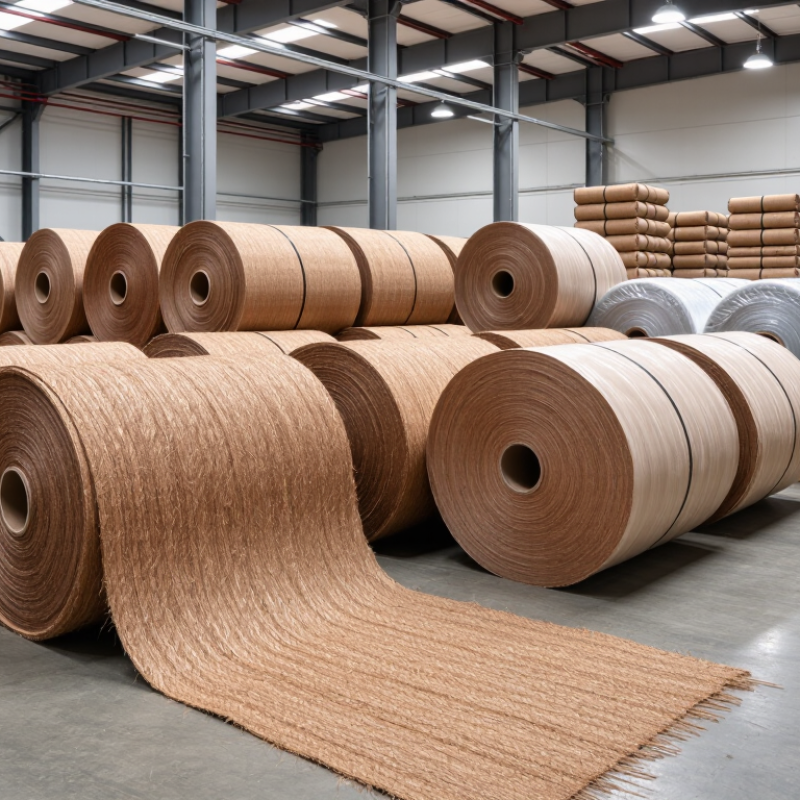
What Coir Geotextiles Are and How They Work
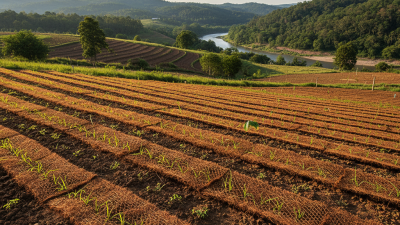
Coir geotextiles are mats or nets made from coconut husk fibers, usually woven or stitched into an open mesh. They are placed over exposed soil to slow runoff, hold loose particles, and give seeds a more stable surface. The mesh does not block water completely. That is useful. Rain can pass through while the fibers soften the force of water hitting bare ground. As roots grow through the openings, vegetation can gradually help bind the slope.
Performance depends on slope angle, rainfall, soil type, and how securely the mat is anchored. On a small embankment, wooden stakes and overlapping edges can help keep the fabric from lifting during a storm. Installation details matter. Coir can also retain some moisture near the soil, which may support seed germination during dry intervals, but it cannot replace watering.
The fibers weather over time, and the rate varies with climate, mat thickness, and exposure. Coir should not be treated as permanent reinforcement. That limitation is easy to overlook. A geotextile may reduce erosion while plants become established, yet poor drainage or weak anchoring can still allow bare channels to form beneath it.
China’s Coir Geotextiles: What They Are and How They Work
Coir geotextiles are erosion-control materials made from coconut-husk fibers. Their open weave helps slow surface runoff and trap sediment while allowing water to pass through, supporting vegetation as it establishes.
Representative nominal areal weights: 400, 700, and 900 g/m² are example specification values for coir erosion-control products, not market averages. Actual weights and performance vary by product construction and site conditions. Selection should also account for slope, water flow, soil, and installation requirements.
How Coir Geotextiles Are Manufactured in China
Coir geotextiles made in China typically start with coconut husks collected from fiber-processing regions. Workers separate the husk fiber by soaking and mechanical extraction, then wash it to remove loose pith and debris. The fibers are dried, graded by length and strength, and spun into coarse yarn. Drying conditions matter: damp fiber can weaken yarn and encourage mold during storage. The details vary. Some facilities rely on more manual sorting, so batches may not feel perfectly uniform.
The yarn is woven or knitted into open mesh, with the aperture and fabric weight set for the intended erosion-control use. Operators inspect the rolls for uneven edges, broken strands, and gaps, then check dimensions and selected strength samples before packing. A clear production record helps buyers trace each batch and compare specifications. Still, a sample cannot reveal every variation across a full shipment. Ask for test data and confirm that the mesh, roll size, and fiber grade match the project requirements. That small check can prevent a costly mismatch on site.
How to Evaluate Chinese Coir Geotextile Manufacturers
China Top Coir Geotextile Manufacturers?
How to Evaluate Chinese Coir Geotextile Manufacturers
A supplier’s catalogue is only a starting point. Ask for recent test reports tied to the exact product grade, not generic coir samples. Compare mass per square metre, tensile strength, aperture size, and water permeability. ISO 10319 measures wide-width tensile properties, while ISO 12956 measures opening size. These methods make quotations easier to compare. Ask who performed the tests and whether the report identifies the production batch. Small detail. It matters.
Check the factory’s fiber sourcing, loom capacity, moisture controls, and packaging. Coir Board India’s 2022–23 annual report records coir-product exports of about ₹4,003 crore. That figure shows an established international trade, but it does not prove any individual factory’s quality. Request a sample roll and inspect its edges, knots, and thickness variation. Then confirm that the tested sample matches the shipment specification. I would not rely on photos alone; they can hide uneven weaving.
Tips: Ask for a dated inspection report, batch traceability, and a written replacement policy. If test results look unusually perfect, request the raw measurements. Check again.
Leading Coir Geotextile Manufacturers in China
Leading Coir Geotextile Manufacturers in China
China’s coir geotextile suppliers serve slope stabilization, drainage, and landscaping projects with woven coconut-fiber mats. Strong manufacturers can document fiber source, mesh opening, roll dimensions, and tensile performance. Ask for test reports, not just product descriptions. The FAO and Intergovernmental Technical Panel on Soils estimated in their 2015 Status of the World’s Soil Resources report that 33% of soils were moderately to highly degraded. This broad finding highlights soil protection needs, though it does not measure demand for coir products specifically.
For buyers, compare samples under realistic site conditions. Check whether the mat lies flat on uneven soil and holds pins securely; a neat catalog image cannot prove this. Request test methods and results for tensile strength and mass per unit area, then compare like with like. Some suppliers may offer customized mesh sizes, but lead times and batch consistency deserve attention. Small details matter. I would also question any claim of “complete erosion control”: slope, rainfall, and installation can change performance.
Tips: Confirm roll width, weight, and packaging before shipment. Ask how the product performs after wetting, and request a sample for a small field trial. Keep installation guidance with the purchase records.
China Top Coir Geotextile Manufacturers? - Leading Coir Geotextile Manufacturers in China
A practical comparison guide to coir geotextile products and supplier qualifications. Specifications vary by product and project; confirm values against current technical data sheets and independent test reports.
| Comparison Dimension |
Relevant Product Information |
What to Verify with a Manufacturer |
| Raw material |
Coir geotextiles are made from coconut-husk fibres. Fibre quality and yarn construction affect product consistency and performance. |
Ask about fibre preparation, yarn construction, and quality checks for incoming materials. |
| Product construction |
Common forms include woven coir meshes and coir erosion-control blankets or mats. |
Confirm whether the offered product is a mesh or a blanket, and request construction details and product photographs. |
| Mass per unit area |
Available weights depend on product type and intended application; there is no single value suitable for every project. |
Compare the declared value and tolerance. Request a test report; ISO 9864 is a method for determining mass per unit area of geosynthetics. |
| Tensile properties |
Tensile strength and elongation vary with fibre, yarn, and construction and are relevant to handling and erosion-control performance. |
Request results in both machine and cross-machine directions. ISO 10319 is a wide-width tensile test method for geosynthetics. |
| Mesh opening |
Opening size depends on the mesh design and influences soil retention and water passage. |
Request the specified opening size and test method. ISO 12956 describes determination of characteristic opening size for geotextiles and related products. |
| Water permeability |
Permeability depends on the product structure and test conditions; it should be selected for the project’s drainage and erosion-control needs. |
Compare test results and stated conditions. ISO 11058 covers testing water permeability characteristics normal to the plane of geotextiles without load. |
| Biodegradation and service period |
Coir is a natural fibre and can biodegrade. The rate depends on exposure, soil, moisture, and product construction. |
Ask for application-specific service-life information and supporting evidence; do not assume one degradation period applies to all sites. |
| Dimensions and packaging |
Roll width, roll length, and packaging are product-specific and may be subject to order requirements. |
Confirm roll dimensions, packing method, labelling, and order quantity in the quotation and purchase specification. |
| Quality documentation |
Technical data sheets and test reports help buyers compare products on a like-for-like basis. |
Check that reports identify the tested product, test method, date, and laboratory. Verify any claimed certifications with the issuing body. |
| Supplier evaluation |
Manufacturer capability cannot be established from product specifications alone. |
Assess production and inspection processes, sample consistency, documentation, export experience, and the supplier’s ability to meet project requirements. |
Applications and Sourcing Considerations for Coir Geotextiles
Applications and Sourcing Considerations for Coir Geotextiles
Coir geotextiles are used on exposed slopes, drainage channels, and riverbanks where rainfall can loosen bare soil. Their open weave slows runoff while allowing vegetation to grow through the mesh. In its technical guidance, India’s Coir Board describes common coir geotextile weights around 400 and 700 g/m², useful reference points when comparing products. Heavier fabric may suit stronger erosion pressure, but site conditions matter more than weight alone.
Check the specification, not just the product name. India’s IS 15869:2008 covers coir geotextiles, while ASTM D6460 provides a test method for evaluating rolled erosion-control products under simulated rainfall. Ask suppliers for verified mass per area, tensile strength, aperture size, and test results tied to the delivered batch. That matters.
Also confirm fiber consistency, stitching, roll width, and storage conditions; damp rolls can develop mold before installation. A neat certificate may not represent every shipment, so request a sample and inspect its weave and edges. Coir is biodegradable, but its service life varies with moisture, sunlight, soil, and product construction. It can be tempting to select the cheapest roll. That choice may fail on steep or fast-flowing sites.