How to Choose Baselok Geocell for Global Projects?
Choosing the right Baselok Geocell for a global project requires more than comparing product prices. Ground conditions, climate, traffic loads, drainage, and installation skills can change the best specification. A solution that performs well on a dry access road may need adjustment on a saturated slope or a coastal embankment.
Experienced engineers usually begin with site evidence. Soil classification, rainfall records, slope geometry, and expected loading should guide the initial selection. Cell height, polymer performance, weld quality, aperture size, and anchoring requirements deserve careful review. Small details matter. A poorly prepared subgrade can undermine a well-designed geocell system.
Baselok Geocell should be evaluated through documented technical data, independent testing, and relevant project references. Look for evidence of tensile strength, environmental resistance, dimensional stability, and long-term performance. Supplier support also matters, especially when crews work across different languages and construction practices. Clear drawings can prevent costly mistakes.
There is no universal specification.
Global projects often face incomplete surveys, changing weather, or limited local testing. That uncertainty should be acknowledged rather than hidden. Engineers may need trial sections, field inspections, and design revisions before full installation. A practical choice balances laboratory results with construction reality. It also considers transport, storage, local expertise, and maintenance access.
This guide explains how to compare Baselok Geocell options responsibly. It focuses on verifiable performance, project-specific risks, and decisions that remain defensible after construction. The final selection should come from qualified professionals and applicable regional requirements, not from marketing claims alone.
What Is Baselok Geocell and How Does It Work?
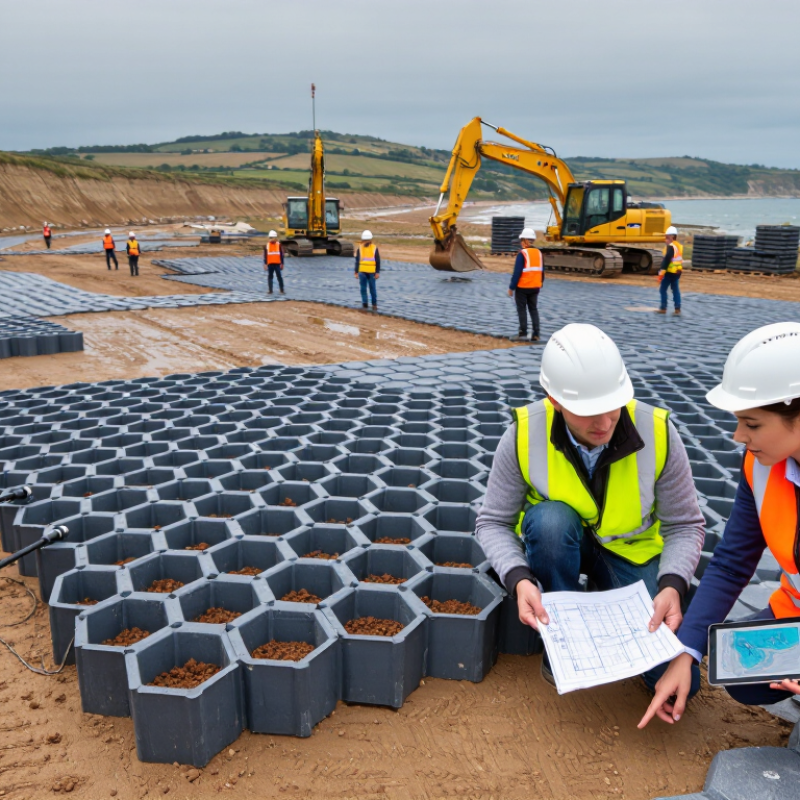
Geocell is a three-dimensional cellular confinement system used to stabilize soil, aggregate, and selected fill. It usually consists of textured polymer strips welded into a honeycomb structure. When expanded, the panels form connected cells across the prepared ground.
During installation, workers anchor the panels, fill each cell, and compact the material in controlled layers. The cell walls limit sideways movement under vehicles, slopes, or repeated loading. This creates a wider load distribution zone and can reduce rutting, settlement, and surface erosion. On soft ground, the system may also work with a geotextile layer beneath it.
Project conditions determine the suitable geocell height, cell size, polymer grade, and anchoring method. A road over wet clay may need deeper cells and stronger confinement than a temporary access path over firm sand. Drainage still matters. Poor water control can weaken the supporting soil beneath the system.
Field experience shows that preparation often matters more than the product specification. Uneven grading, inadequate compaction, or poorly fixed edges can reduce performance quickly. It is not a magic fix. Engineers should verify soil strength, traffic loads, slope angles, temperature exposure, and local construction practice before choosing a system for an international project. Laboratory data helps, but site trials can reveal problems that drawings miss.
How to Choose Baselok Geocell for Global Projects? - What Is Baselok Geocell and How Does It Work?
Technical selection guide for geocell-based soil confinement, load distribution, erosion control, and slope protection
| Selection Dimension | What It Means | Typical Technical Range or Fact | Recommended Choice for Global Projects | Verification Point |
|---|---|---|---|---|
| Basic Function | A geocell is a three-dimensional cellular confinement system that limits lateral movement of infill material. | Cells are normally expanded on site and filled with soil, aggregate, sand, or concrete. | Select a system designed for the intended infill and the expected traffic, hydraulic, or slope loads. | Confirm the design includes cell dimensions, infill type, anchoring, and load conditions. |
| Polymer Type | The polymer determines flexibility, chemical resistance, weld performance, and service durability. | High-density polyethylene is commonly used because it is resistant to moisture, salts, and many naturally occurring soil chemicals. | Use a documented polyethylene grade suitable for the project temperature, chemical exposure, and installation conditions. | Request polymer identification, technical data, and compatibility information for contaminated or saline environments. |
| Cell Depth | Cell depth controls the degree of confinement and the thickness of the stabilized layer. | Common project depths are approximately 50–300 mm; deeper systems may be specified for demanding applications. | Use shallower cells for surface erosion protection and deeper cells for weak subgrades, access roads, or load distribution. | Match the depth with bearing capacity, traffic loading, slope angle, and the required cover or infill thickness. |
| Cell Opening Size | Opening size affects aggregate compatibility, confinement efficiency, and installation productivity. | Typical expanded cell widths are often in the approximate range of 200–600 mm, depending on the system. | Choose an opening that retains the selected infill while allowing practical placement and compaction. | Check the relationship between cell size, aggregate grading, fines content, and drainage requirements. |
| Strip Thickness | Thickness influences tensile capacity, puncture resistance, weld strength, and handling durability. | Commercial geocell strips commonly use thicknesses of roughly 1.0–2.0 mm, with project-specific variations. | Use heavier sections for high traffic, coarse angular aggregate, severe abrasion, or difficult installation conditions. | Review tensile, seam, puncture, and dimensional stability test results rather than thickness alone. |
| Weld Spacing | The spacing between transverse welds defines the expanded cell geometry and affects confinement. | Common weld spacings are approximately 330–660 mm, although project-specific sizes are available. | Use closer spacing where higher confinement or smaller infill particles are required. | Confirm weld peel strength, shear strength, consistency, and long-term seam performance. |
| UV Resistance | Exposure to ultraviolet radiation can degrade exposed polymer if stabilization is inadequate. | Carbon-black-stabilized polyethylene is commonly used for improved outdoor weathering resistance. | Specify UV-stabilized material when the geocell will remain exposed during service or construction delays. | Request accelerated weathering data and maximum recommended exposure time before covering. |
| Climate and Temperature | Temperature affects polymer flexibility, installation behavior, and long-term performance. | Polyethylene remains flexible at low temperatures, but installation limits and project-specific temperature ranges must be checked. | Select a formulation supported by testing for the lowest and highest expected site temperatures. | Review climatic records, freeze-thaw exposure, thermal cycling, and manufacturer installation limits. |
| Infill Material | Infill transfers loads through the confined layer and strongly affects drainage and surface stability. | Typical infills include graded aggregate, crushed stone, sand, selected soil, and concrete. | Use free-draining aggregate for drainage layers, suitable soil for vegetated slopes, and concrete where a rigid surface is required. | Verify gradation, moisture content, compaction method, friction angle, and compatibility with the cell opening. |
| Traffic and Load Level | Geocell improves load distribution by confining infill and reducing lateral spreading. | Performance depends on subgrade strength, cell depth, infill, cover thickness, drainage, and traffic repetitions. | Use a designed pavement or working-platform section for roads, haul routes, parking areas, and heavy equipment access. | Require calculations or field trials for axle loads, rutting limits, settlement, and design life. |
| Slope Protection | Filled cells help resist surface washout and keep cover soil or aggregate in place. | Applications include embankments, channels, drainage ditches, shorelines, and exposed soil slopes. | Select cell depth, anchoring, and cover based on slope angle, rainfall intensity, flow velocity, and surface shear stress. | Check hydraulic calculations, toe protection, crest anchorage, intermediate anchors, and outlet details. |
| Drainage and Filtration | Geocell does not automatically replace a drainage or filtration layer. | Water movement depends on the infill, subgrade, filter layers, surface geometry, and outlet design. | Use a compatible geotextile separator or filter where soil migration, piping, or clogging is possible. | Confirm permeability, apparent opening size, filtration criteria, subdrains, and positive water discharge. |
| Anchoring System | Anchors hold the expanded panels in position and resist sliding, uplift, and movement during filling. | Anchor type and spacing vary with soil strength, slope geometry, hydraulic forces, and cell dimensions. | Use stakes, pins, trenches, or engineered edge restraints appropriate to the site conditions. | Obtain an anchoring layout and verify pullout resistance, edge restraint, and installation sequence. |
| Installation Conditions | Correct expansion, alignment, filling, and compaction are essential for the system to perform as designed. | Panels are generally deployed on a prepared surface, connected, anchored, filled, and compacted in controlled stages. | Choose a system that can be installed with locally available labor, equipment, and approved construction methods. | Require method statements, inspection checklists, connection details, and quality-control procedures. |
| Sustainability and Service Life | Durability, reduced aggregate thickness, lower maintenance, and local infill can affect life-cycle performance. | Service life depends on polymer durability, exposure, loading, installation quality, and site chemistry. | Compare complete life-cycle impacts rather than material quantity alone, including transport, maintenance, and replacement. | Request durability evidence, recycled-content information where relevant, and end-of-life handling guidance. |
| Standards and Documentation | Project acceptance depends on traceable testing, consistent manufacturing, and compliance with applicable specifications. | Relevant requirements may include national geosynthetic specifications, project standards, test methods, and quality-management records. | Select a system with complete technical documentation suitable for the destination country and project authority. | Check datasheets, certificates, batch records, test reports, installation manuals, and independent quality inspections. |
Related Posts
-
Top 10 Benefits of Baselok Geocell for Your Construction Projects?
-
How to Use Baselok Geocell for Effective Ground Stabilization?
-
How to Choose Baselok Geocell for Your Project Needs?
-
10 Tips for Geotextile Uses and Selection
-
Why Choose Geotech Fabric for Your Next Project?
-
What is Geotextile Gsm and Its Importance for Global Buyers?
-

Phone
-

E-mail
-

Whatsapp
-

Top