How to Choose the Right Geotex Textiles for Your Project?
Choosing the right Geotex Textiles for your project can be challenging. With various types and applications, understanding their properties is crucial. Geotex Textiles serve many functions, like erosion control, drainage, and stabilization. Each project has unique demands that require careful consideration.
Experience matters when selecting Geotex Textiles. Knowing the site conditions and project goals helps guide your decision. What works in one situation may not suit another. Evaluate your needs thoroughly.
Consulting experts can enhance your understanding. Their knowledge brings clarity to the selection process. Remember, the wrong choice can lead to project delays and increased costs. Make informed decisions. Prioritize quality and functionality for your Geotex Textiles selection.
Understanding Geotextiles: Types and Applications
Geotextiles are vital materials in modern engineering and construction. These textiles come in various types, each suitable for specific applications. Understanding their functionalities helps in making an informed choice for your project. For instance, woven geotextiles offer high tensile strength, making them perfect for applications like road construction. Non-woven types, on the other hand, excel in drainage and filtration, crucial for managing water flow.
When selecting geotextiles, consider the environment. Soil type, moisture levels, and load requirements significantly impact performance. A project in sandy soil might benefit from a different geotextile than one in clay. It’s essential to reflect on unique site conditions. Testing small samples before full-scale application can reveal unexpected challenges.
Additionally, awareness of long-term durability is vital. Some geotextiles degrade faster under UV exposure or chemical interactions. This aspect often gets overlooked, leading to costly replacements. Understanding the lifespan of your chosen material helps in planning. It's a complex decision, and each project warrants careful evaluation of these factors to achieve the best results.
Key Factors to Consider When Selecting Geotextiles
When selecting geotextiles for your project, understanding specific requirements is crucial. Different projects, from road construction to erosion control, require varying types of geotextiles. Identify the function you need the textiles to perform. For instance, will they need to provide drainage, separation, or reinforcement? Each function dictates a different type of fabric.
Next, consider the environmental conditions. Soil type, moisture levels, and temperature variations all influence your choice. For example, certain geotextiles perform better in saturated conditions, while others are suited for dry environments. It's also essential to examine the durability of materials. High UV resistance and tear strength may be necessary for long-lasting applications.
Finally, look into installation and maintenance needs. Some geotextiles are easy to handle and quick to install, while others may demand specialized techniques. Assessing the skill level of your team matters. A complex product might lead to errors or project delays. Reflect on your project’s specifics and the potential oversight of selecting the right textiles. Making an informed choice can ultimately save time and resources.
Evaluating Project Requirements for Geotextile Use
When evaluating project requirements for geotextile use, it is crucial to understand their diverse applications. Geotextiles serve as functional barriers, separators, and reinforcements in various industries, including construction, agriculture, and environmental projects. According to the Geosynthetic Materials Association (GMA), the global geosynthetics market is projected to reach $16.2 billion by 2027. This underscores the growing reliance on geotextiles for sustainable construction practices.
A thorough analysis begins with identifying soil conditions. High soil moisture levels may require permeable geotextiles. Conversely, areas prone to sedimentation need materials that provide effective filtration. The American Society of Civil Engineers (ASCE) emphasizes the importance of choosing the right geotextile for soil types to improve longevity and performance. Project managers must also consider environmental factors. Will the project face extreme weather? Incorporating climate resilience is essential for durability.
Budget constraints often limit options. However, investing in high-quality materials can lead to long-term savings. Failing to recognize this might result in premature failures. Additionally, understanding project longevity is crucial. Specifications that don’t align with service life can lead to costly overruns. Data from environmental assessments may reveal patterns that inform material choices. Ultimately, the effectiveness of geotextiles hinges on these evaluations.
Comparing Geotextile Materials and Specifications
When selecting geotextile materials for your project, it is crucial to understand their specifications. Geotextiles vary widely in function and application. Some are designed for drainage, while others offer reinforcement or separation. Each type serves specific needs, which can impact your project’s success.
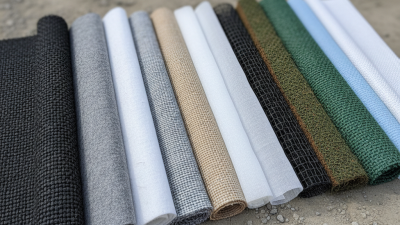
A few common types include woven geotextiles and non-woven geotextiles. Woven options have excellent tensile strength. They are ideal for reinforcement. Non-woven geotextiles are used primarily for filtration and drainage. Knowing the differences helps you make informed choices.
Tips: Always consider soil conditions. Understand how water movement will affect your installation. Testing geotextile performance in the field can reveal unexpected challenges. For complex projects, consulting with a geotechnical engineer may be beneficial. They can provide insights that save time and resources.
Comparison of Geotextile Material Types for Construction Projects
Best Practices for Implementing Geotextiles in Construction Projects
When implementing geotextiles in construction, proper selection is crucial. The choice should align with project goals and environmental conditions. For soil erosion control, choose woven geotextiles. They offer excellent drainage and soil separation. Non-woven variants work better for filtration and stabilization. Understanding soil types is essential. Failure to align materials with site specifics can lead to project complications.
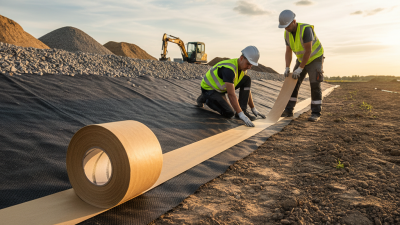
Installation techniques matter significantly. Ensure that geotextiles are laid flat and without wrinkles. Overlapping seams should be a minimum of 12 inches, enhancing stability. Monitoring the conditions during installation is key. Heavy rains or strong winds can disrupt the application process. Such details can’t be overlooked.
Regular inspections post-installation are crucial. They help identify any weaknesses early. Sometimes, geotextiles degrade due to poor environmental conditions or project misuse. Keeping track of their performance is necessary for long-term success. Reflect on your implementation methods to identify areas for improvement. Adjustments may be needed as challenges arise.
How to Choose the Right Geotex Textiles for Your Project? - Best Practices for Implementing Geotextiles in Construction Projects
| Geotextile Type |
Key Characteristics |
Best Use Cases |
Advantages |
Considerations |
| Woven Geotextiles |
High tensile strength, good drainage |
Soil reinforcement, road construction |
Durable and stable under load |
Less effective for filtration |
| Non-Woven Geotextiles |
Excellent filtration, moderate strength |
Drainage applications, erosion control |
Good water flow and drainage |
Lower tensile strength |
| Geogrids |
Lattice structure, high load-bearing capacity |
Stabilization of soil and slopes |
Reduces soil movement and settlement |
Installation requires careful handling |
| Composite Geotextiles |
Combination of woven and non-woven features |
Various applications including road and landfill |
Versatile for multiple functions |
May cost more than standard textiles |