2026 Best Geogrid Fabric Options for Your Construction Projects?
In the world of construction, selecting the right materials is crucial for project success. One such material gaining attention is Geogrid Fabric. This sophisticated fabric enhances the stability and strength of soil structures. Its application spans various projects, from roadways to embankments, ensuring long-term durability.
Geogrid Fabric is designed to distribute loads and mitigate soil movement. It offers a reliable solution, especially in areas with challenging soil conditions. As construction projects evolve, the demand for high-quality geogrid options will only increase. However, not all geogrids are created equal. It’s essential to evaluate different types and manufacturers to find the best fit.
Choosing the right Geogrid Fabric requires expert insight. However, many engineers and contractors face challenges in making the best choice. Understanding specifications, load requirements, and project needs can be daunting. The market is flooded with options, which can lead to confusion. Thus, exploring the best geogrid fabric options is more important than ever for effective and safe construction practices.
Best Geogrid Fabric Options for Construction Projects in 2026
When planning construction projects in 2026, choosing the right geogrid fabric is crucial. Various geogrid types offer different benefits. For instance, uniaxial geogrids are ideal for soil reinforcement. They enhance load distribution and increase stability, making them suitable for roadways and embankments. The choice of fabric ultimately affects the durability and efficacy of structure.
Another promising option is biaxial geogrids. These offer multidirectional strength, which is vital for retaining walls and slopes. They are versatile and can adapt to various soil conditions, enhancing the project’s overall integrity. However, the installation process can present challenges. Proper techniques must be employed to avoid issues like slippage or misalignment.
Using high-quality geogrids is essential, but it's important to consider project-specific needs. Not all projects require the same type. Evaluating soil conditions and project goals will guide the selection process. Each decision affects the project’s success. Careful planning and consultation with industry professionals can optimize geogrid performance. Be open to learning about and adjusting choices, as every project presents unique challenges.
2026 Best Geogrid Fabric Options for Your Construction Projects
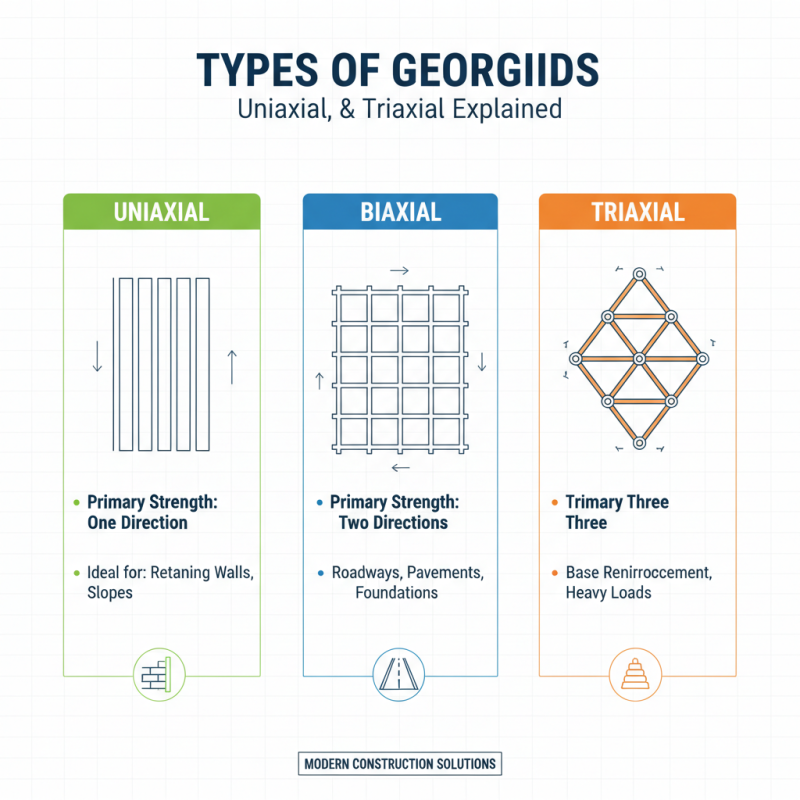
Types of Geogrids: Uniaxial, Biaxial, and Triaxial Explained
Geogrids play a crucial role in modern construction projects. Understanding the types of geogrids available is key to making informed choices. The three main types are uniaxial, biaxial, and triaxial geogrids, each designed for specific applications.
Uniaxial geogrids are often used for retaining walls and slopes. They provide strength in one direction. This focus allows them to distribute loads effectively. However, they may not offer enough stability in all situations. Designers must consider their limitations.
Biaxial geogrids, on the other hand, distribute loads in two directions. They are suitable for road construction and sub-base reinforcement. Their versatility makes them popular. Still, they may require more careful installation to avoid misalignment. Triaxial geogrids combine the strengths of both. They excel in soil stabilization. While they offer enhanced performance, the cost can be a concern for some projects. Each type has unique features, and understanding these can prevent costly mistakes.
Factors to Consider When Choosing Geogrid Fabrics
When selecting geogrid fabrics for construction projects, it's important to evaluate several critical factors. Understand the load-bearing requirements of your project. Different geogrids offer varying tensile strengths. A study showed that a geogrid with a tensile strength of 30 kN/m significantly improves soil stability in embankments. Project specifications will dictate what is necessary.
Soil types also play a vital role in choosing the right geogrid. For instance, cohesive soils may benefit from a biaxial geogrid, while granular soils often perform better with uniaxial options. Factors such as drainage capabilities and erosion resistance must be considered as well. The Geosynthetic Research Institute found that improperly selected geogrids can lead to a 15% increase in settlement issues.
Lastly, environmental conditions cannot be overlooked. UV exposure, thermal cycles, and moisture levels all impact performance. A geogrid may degrade faster in hot, sunny areas. Research indicates that UV-resistant geogrids can extend lifespan by up to 20%. An awareness of these factors ensures a well-informed decision that can enhance the durability of the construction project.
Top Brands and Manufacturers of Geogrid Fabrics in 2026
In 2026, selecting the right geogrid fabric for construction projects is more crucial than ever. Various manufacturers now offer diverse options tailored to specific needs. Each brand varies in terms of material qualities, performance, and cost-effectiveness. Some might excel in tensile strength, while others focus on UV resistance. This range can make the decision-making process overwhelming.
When evaluating top brands, consider material certifications and industry standards. Reliable manufacturers undergo rigorous testing to ensure their products meet safety and durability guidelines. Field performance matters too; some fabrics may perform well in lab tests but falter in real-world applications. A thorough assessment of case studies from reputable sources can shed light on long-term performance experiences.
It's essential to engage with industry professionals and gather insights. Networking with peers who have utilized different geogrid fabrics can provide valuable perspectives. There are often gaps in understanding the practical implications of each type. This underlines the need for thorough research and thoughtful reflection before making a final choice.
Applications of Geogrid Fabrics in Various Construction Projects
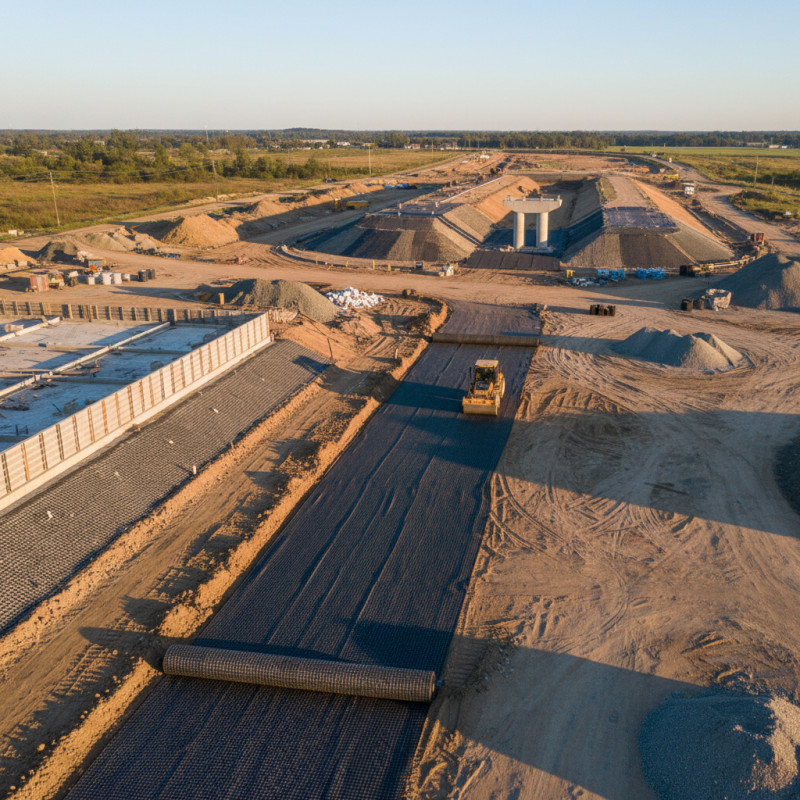
Geogrid fabrics play a critical role in various construction projects. They enhance the performance of soil, making them essential for road construction and earth retention systems. By providing tensile strength, these fabrics help distribute loads evenly. This reduces soil deformation and increases stability. In applications where heavy machinery operates, geogrids can significantly improve the lifespan of the infrastructure.
In pavement design, geogrids are integrated into the sub-base layer. This allows for better load transfer and less settlement over time. Their use in retaining walls is also notable. Here, geogrids reinforce the soil behind the wall, which can prevent failure under lateral loads. However, these applications come with challenges. Proper installation is crucial. If not executed well, the benefits can diminish.
While the advantages are clear, not all projects may warrant their use. It is essential to evaluate the specific requirements and budget constraints. Sometimes, cheaper alternatives may seem appealing but may not deliver the same reliability. It’s vital to assess site conditions carefully. Relying on expertise can lead to better outcomes in construction.
2026 Best Geogrid Fabric Options for Your Construction Projects
| Geogrid Type |
Material |
Application |
Load Capacity |
Durability |
| Biaxial Geogrid |
Polyethylene |
Base Stabilization |
Up to 300 kN/m |
High |
| Uniaxial Geogrid |
Polypropylene |
Retaining Walls |
Up to 500 kN/m |
Very High |
| Composite Geogrid |
Geotextile & Geogrid |
Soil Reinforcement |
Up to 400 kN/m |
High |
| Fiberglass Geogrid |
Fiberglass Reinforced |
Pavement Reinforcement |
Up to 600 kN/m |
Excellent |
| Nexus Geogrid |
Polyester |
Slope Stabilization |
Up to 350 kN/m |
Medium |