Why Choose Woven Geofabric for Soil Stabilization?

Why Choose Woven Geofabric for Soil Stabilization?

Soil stabilization often begins with a simple problem: weak ground cannot carry repeated loads. Under a gravel road, trapped moisture and pumping soil can quickly create ruts. Woven Geofabric offers tensile restraint, separation, and improved load distribution across unstable subgrades. It creates a visible working layer between aggregate and soil. The result can be fewer construction interruptions and more dependable access.

The U.S. Federal Highway Administration identifies separation and reinforcement as key geosynthetic functions in roadway construction. Its Geosynthetics Design and Construction Guidelines recommend evaluating strength, filtration, survivability, and site-specific soil conditions. NCHRP Report 429 also documents how geosynthetic reinforcement can improve aggregate-base performance over weak subgrades. These findings support careful use, not automatic use.

Design still matters most.

Robert M. Koerner, a leading geosynthetics author, defines geotextiles as “permeable textile materials used in contact with soil, rock, or other geotechnical materials.” That principle explains why Woven Geofabric must match the project’s actual demands. Aperture size affects soil retention. Tensile strength affects restraint. Installation damage can reduce laboratory performance in the field. A stronger fabric is not always the better fabric.

Engineers should verify subgrade strength, drainage, aggregate quality, and trafficking conditions before selecting a product. Site experience teaches an uncomfortable lesson: specifications can look perfect on paper and still fail during placement. Woven Geofabric is not a shortcut. Used with sound drainage and compaction practices, it can provide a practical, measurable layer of stability.
Why Choose Woven Geofabric for Soil Stabilization?

What Is Woven Geofabric?

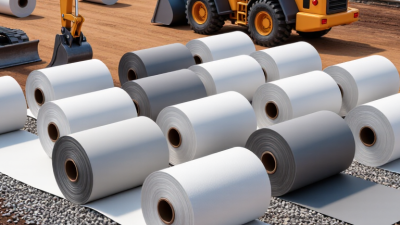
Woven geofabric is a manufactured textile used inside soil and aggregate structures. It is made by interlacing polymer tapes or yarns into a regular grid. This structure gives the fabric high tensile strength and controlled openings. Unlike a loose mesh, it resists stretching when placed under traffic or fill.

For soil stabilization, the fabric spreads wheel loads across weak ground. It also separates soft subsoil from imported stone, helping preserve the aggregate layer. Water can still move through the fabric, although permeability varies by weave and product design. Engineers usually check tensile strength, puncture resistance, apparent opening size, and permittivity before selecting it. A fabric with excellent strength may not suit every drainage condition.

Field performance depends heavily on installation. The ground should be cleared of sharp debris and reasonably leveled. The fabric must lie flat, with wrinkles removed and overlaps secured. Heavy aggregate should be placed carefully, not pushed aggressively across exposed fabric. On a muddy access road, small installation shortcuts can create folds, tears, or weak seams. That part is easy to underestimate.

Woven geofabric is not a cure for every unstable soil. It cannot replace proper drainage, grading, or structural design. Site investigation should identify water levels, soil strength, expected loads, and construction equipment. In practice, the best result often comes from matching the weave, aggregate thickness, and anchoring method to the actual ground—not relying on fabric strength alone.

How Woven Geofabric Stabilizes Soil

Why Choose Woven Geofabric for Soil Stabilization?

Woven geofabric stabilizes soil through separation, reinforcement, and controlled drainage. Its tightly arranged polymer tapes distribute wheel loads across weak ground. This reduces rutting near construction access roads and temporary platforms. The U.S. Federal Highway Administration identifies reinforcement and separation as key geosynthetic functions in its Geosynthetic Design and Construction Guidelines, FHWA NHI-07-092.

Under repeated loading, woven fabric limits aggregate movement and preserves the designed soil profile. It can also prevent fine particles from entering a crushed-stone layer. That matters on silty subgrades, especially after heavy rain. FHWA guidance on geosynthetic reinforced soil systems reports possible cost savings of 25% to 60%, although results depend on design, access, and local materials. That range should not become a promise. Field conditions often resist neat calculations.

Tips: Check tensile strength, apparent opening size, and permeability together. A stronger fabric is not automatically better. Confirm the soil’s grain size, moisture, and expected traffic before selection. Install it without folds, punctures, or loose overlaps. ASTM D4595 tensile testing can support product comparison, but laboratory strength will not equal field performance. Drainage details are easy to underestimate. Poor outlets can leave stabilized soil saturated and weak. A site inspection after rainfall may reveal problems that drawings miss.

Why Choose Woven Geofabric for Soil Stabilization? - How Woven Geofabric Stabilizes Soil

Key performance dimensions, stabilization mechanisms, and typical engineering considerations

Performance Dimension How Woven Geofabric Stabilizes Soil Typical Data or Range Primary Benefit Typical Applications Important Design Consideration
Tensile Reinforcement Interlocking with aggregate and developing tensile resistance helps distribute loads across weak subgrade areas. Common product range: approximately 20–200 kN/m tensile strength Improves bearing performance and limits lateral spreading of fill. Unpaved roads, working platforms, embankments, and temporary access roads. Select strength according to traffic loading, fill thickness, subgrade strength, and required service life.
Aggregate Confinement The woven structure restricts aggregate movement and creates a more stable load-transfer layer above soft soil. Performance depends on aperture size, rib geometry, interface friction, and aggregate gradation. Reduces rutting, pumping, and aggregate displacement under repeated loading. Road bases, parking areas, haul roads, and construction platforms. The geofabric should be placed without folds and covered promptly to prevent construction damage.
Separation Openings retain base-course particles while allowing limited interaction between the aggregate and the subgrade. Opening size must be compatible with soil particle size and aggregate gradation. Helps prevent contamination of aggregate by fine-grained subgrade soil. Granular road bases, rail subgrades, parking lots, and soft-ground construction. Design should consider apparent opening size, soil gradation, and the risk of soil intrusion during construction.
Filtration and Drainage Engineered openings permit water movement while limiting the migration of soil particles. Permittivity and apparent opening size are product-specific; values must be checked against project requirements. Helps control excess pore-water pressure and preserves drainage paths. Subsurface drainage layers, road shoulders, retaining structures, and erosion-control systems. Do not use a reinforcement-focused woven fabric as a substitute for a dedicated drainage geotextile without hydraulic verification.
Restriction of Rutting Tensile restraint and aggregate confinement reduce permanent deformation caused by wheel loads. Rutting reduction is project-dependent and cannot be represented by one universal percentage. Can reduce maintenance frequency and preserve the usable profile of unpaved surfaces. Low-volume roads, forestry roads, agricultural roads, and construction haul routes. Results depend strongly on subgrade CBR, traffic repetitions, aggregate thickness, drainage, and installation quality.
Low Elongation Many woven products develop tensile resistance at relatively low strain, allowing early structural interaction. Elongation is product-specific; some reinforcement-grade woven products are designed for relatively low elongation. Supports efficient load transfer where deformation control is important. Reinforced working platforms, embankment foundations, and subgrade improvement projects. Use the complete tensile stress–strain curve rather than tensile strength alone for engineering design.
Construction Efficiency Roll-form installation covers large areas quickly and provides a visible separation layer during aggregate placement. Installation speed varies with roll width, site access, overlaps, anchoring, and ground conditions. Can reduce aggregate loss into weak soil and simplify placement operations. Large-area roadworks, site access routes, and phased construction platforms. Specify overlap lengths and joining methods based on subgrade conditions and construction equipment.
Durability Polymer fibers provide resistance to biological degradation and many naturally occurring soil environments. Service life depends on polymer type, ultraviolet exposure, pH, temperature, oxidation, and mechanical damage. Supports long-term separation and reinforcement when correctly selected and protected. Permanent roads, embankments, landfills, drainage systems, and retaining structures. Cover exposed fabric promptly and verify chemical and durability requirements for the site environment.
Cost and Material Optimization By improving confinement and reducing subgrade intrusion, the system may allow more efficient use of aggregate thickness. Any aggregate reduction must be established through design calculations, testing, or validated mechanistic methods. May lower total construction material, haulage, and maintenance requirements. Soft-soil roads, remote sites, large paved areas, and projects with high aggregate transport costs. Compare whole-life cost rather than fabric purchase price alone, including installation, maintenance, and replacement risks.
Recommended Selection Criteria Product selection combines mechanical, hydraulic, durability, and installation requirements. Review tensile strength, tensile strain, mass per unit area, aperture size, permittivity, puncture resistance, and durability data. Improves the likelihood that the geofabric will perform as intended under actual site conditions. All soil stabilization and geosynthetic reinforcement projects. Final selection should be completed by a qualified geotechnical engineer using site-specific soil and loading data.

Engineering note: The ranges and descriptions above are general technical guidance rather than project-specific design values. Actual performance depends on soil classification, subgrade strength, loading, drainage, aggregate properties, installation practices, and the certified properties of the selected woven geofabric.

Key Benefits for Soil Stabilization

Woven geofabric helps stabilize weak soil by separating subgrade from aggregate. Its interlaced structure provides strong tensile support under repeated traffic and construction loads. This support limits rutting, aggregate migration, and uneven settlement. It also helps maintain a cleaner, more stable working platform during installation.

Key benefits include improved load distribution, reduced maintenance, and better material efficiency. Engineers can often reduce aggregate loss because the fabric keeps soil and stone layers apart. Water may still pass through, depending on the fabric’s permeability and soil conditions. However, woven geofabric is not a cure-all. A design must consider soil strength, drainage, expected loads, and installation quality. On one project, poor overlap placement weakened performance despite using suitable material. That detail is easy to overlook.

Tips: Remove sharp debris before placement. Keep the fabric reasonably smooth, without deep folds. Follow the specified overlap width, especially on soft ground. Use test data, site experience, and professional engineering guidance when selecting tensile strength and opening size. Inspect seams, edges, and damaged areas before covering the fabric. Small installation errors can become visible as ruts after heavy rainfall or repeated vehicle movement.

Factors to Consider When Selecting Woven Geofabric

Why Choose Woven Geofabric for Soil Stabilization?

Woven geofabric can improve soil stability by separating weak ground from aggregate layers. Its interlaced structure provides high tensile strength under repeated traffic. Selection should begin with the site, not the product catalog. Examine soil type, moisture, traffic loads, slope angle, and drainage conditions. Clay may need a different fabric than loose sand. A material with suitable tensile strength can still fail if its openings do not match the soil particles. Check apparent opening size, permeability, grab strength, and puncture resistance. These values should come from recognized laboratory testing standards.

Installation details deserve equal attention. Confirm whether the fabric will face sunlight, sharp stone, standing water, or heavy construction equipment. UV resistance matters when the material cannot be covered quickly. On a road project, overlaps should remain stable while aggregate is placed. Wrinkles and exposed edges can create weak points. Small details matter. I have seen good specifications weakened by careless subgrade preparation. Remove protruding rocks, repair soft pockets, and keep the fabric reasonably taut without stretching it excessively. Drainage still matters. A strong woven layer cannot correct blocked outlets or trapped water. Review seam strength and anchoring needs for slopes. Also question every calculation. Field moisture and actual compaction may differ from design assumptions. A short trial section can reveal problems before full installation begins.

Installation Process for Soil Stabilization Projects

Why Choose Woven Geofabric for Soil Stabilization?

Installation begins with a careful site inspection. Remove roots, sharp stones, standing water, and unstable surface material. The subgrade should be firm, even, and shaped to match the drainage plan. A woven geofabric can separate weak soil from aggregate while distributing traffic loads across a wider area. Field experience shows that poor preparation causes more failures than fabric selection. Keep it clean.

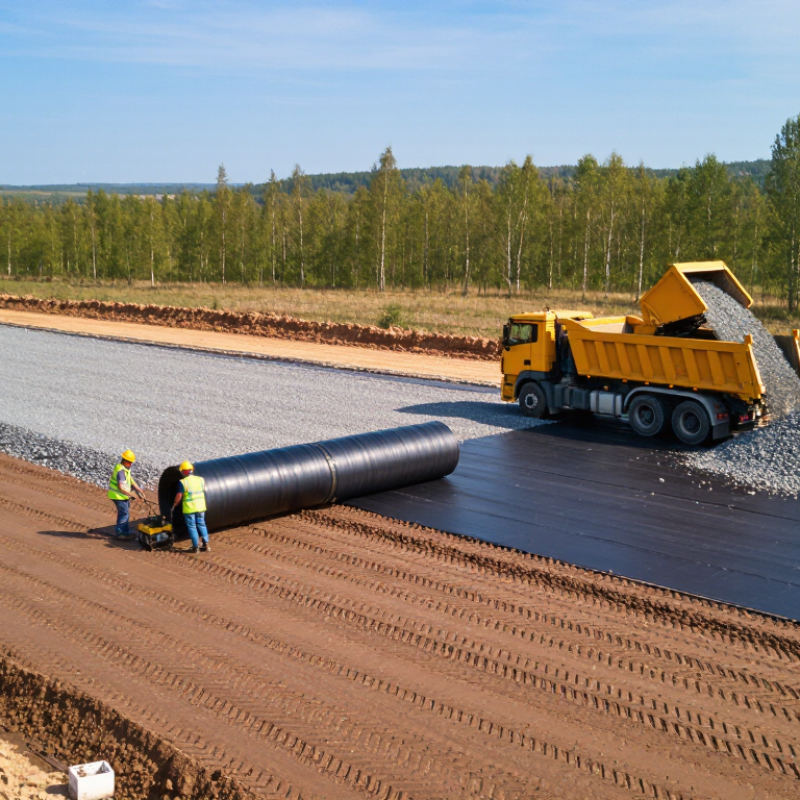
Roll the geofabric along the planned alignment without dragging it across rough ground. Avoid folds, wrinkles, and unnecessary cuts. Overlap adjacent panels according to the project design, especially where soil is soft or construction traffic is heavy. Secure the fabric with pins, staples, or temporary ballast before placing aggregate. Measure twice. Never drive directly over uncovered fabric with loaded equipment.

Place aggregate from the edge or from an already covered section, keeping machinery movement controlled. Spread the first layer gently, then compact it in measured passes. Inspect exposed seams, punctures, and displaced overlaps before covering the fabric. Repairs should use a patch extending beyond the damaged area on every side. A perfect installation is uncommon; rushed work happens, even on experienced crews. That is why photographs, seam records, and compaction checks matter. Local soil conditions, drainage requirements, and engineering specifications should guide the final method.

Why Choose Woven Geofabric for Soil Stabilization?

Typical field dimensions used during woven geofabric installation. Actual values should be confirmed by the project specification, site conditions, and local engineering standards.

During installation, the prepared subgrade should be cleared of sharp objects, the woven geofabric should be placed without folds, and adjacent sheets should be overlapped according to ground conditions. Secure the edges, place aggregate from the edge or end of the working area, and avoid sudden turning or braking directly on exposed fabric. Adequate initial cover helps protect the geofabric and transfers construction loads more evenly across weak soil.