2026 Top Drainage Board Options for Effective Water Management?
Effective water management is crucial in today's world. The right drainage solutions can make a significant difference. According to Dr. Emily Turner, an expert in the drainage industry, "A quality drainage board can prevent water damage and enhance soil stability."
Selection of the right drainage board plays a pivotal role. Various options are available, each with unique features. For example, some are designed for heavy rain, while others handle moderate precipitation. Understanding specific needs is vital for effective drainage strategies.
Yet, challenges remain. Many users overlook the importance of installation. Improper setup can reduce the efficiency of even the best drainage boards. Continuous evaluation and refinement of chosen solutions are necessary for long-term success.
Top Types of Drainage Boards for Sustainable Water Management
When considering drainage boards for sustainable water management, there are several effective types to explore. Each type serves a distinct purpose and can influence how water is managed in various landscapes. One popular option is the perforated drainage board. It allows excess water to pass through while filtering out sediments. This can prevent clogging and maintain drainage efficiency.
Another option is the non-perforated drainage board, which redirects water away from structures. This type is essential in areas prone to flooding. It acts as a barrier, channeling water safely. However, its effectiveness often depends on proper installation. Mistakes here can lead to water pooling and inevitable damage.
Finally, we have geocomposite drainage boards. They combine different materials, offering superior drainage capabilities. They can be a bit more complex to install, which might lead to user frustration. Finding the right type for specific conditions requires careful planning. Each board has unique strengths and weaknesses. Users must reflect on their particular needs and local conditions for optimal results.
Key Features to Look for in Effective Drainage Board Solutions
When selecting effective drainage board solutions, consider key features that enhance performance. Look for material that provides excellent water flow and durability. A high-quality drainage board often includes channels or grooves that facilitate water movement. This helps prevent soil erosion and reduces water pooling. Effective drainage boards need to withstand harsh weather conditions without degradation. Choose options that offer resistance to mold and algae growth.
Another crucial feature is the board's thickness. Thicker boards tend to provide better structural integrity and withstand pressure from soil and water. Optimal drainage solutions also have filters to prevent sediment clogging. Yet, some boards might not provide adequate filtration, leading to long-term issues. It’s important to assess your specific site conditions carefully.
Installation versatility is another point to glance at. Some boards are designed for easy installation but can be costly. Others may require professional installation and planning. Budget constraints might push users toward less effective choices. Ask questions. Reflect on existing drainage issues before settling on a solution. By considering these aspects, you can better navigate your options and enhance water management strategies.
2026 Top Drainage Board Options for Effective Water Management
| Drainage Board Type |
Material |
Thickness (mm) |
Drainage Capacity (L/m²/s) |
Weight (kg/m²) |
UV Stability |
| Polypropylene Board |
Polypropylene |
20 |
2.5 |
1.2 |
Yes |
| HDPE Board |
High-Density Polyethylene |
25 |
3.0 |
1.5 |
Yes |
| Geocomposite Board |
Composite Materials |
30 |
5.5 |
2.0 |
Yes |
| PVC Board |
Polyvinyl Chloride |
15 |
2.0 |
1.1 |
Yes |
Comparative Analysis of Popular Drainage Board Materials
When choosing drainage board materials, understanding their properties is essential. There are several options available, each with unique characteristics. Some materials offer excellent water flow, while others focus on durability. Yet, not all options perform equally in real-world conditions.
For instance, plastic boards are lightweight and resistant to corrosion. They are easy to install and handle. However, their longevity can be questionable. Over time, exposure to UV light may weaken them. Conversely, composite boards are heavier but provide better longevity. They resist degradation from moisture, but installation requires more effort.
Evaluating the drainage capacity of these materials is crucial. Some boards may clog easily, leading to water pooling. Maintaining optimal drainage is vital for effective management. User feedback often highlights these challenges, prompting further investigation and development. In many cases, the best choice depends on specific project needs and local conditions.
Installation Best Practices for Optimal Drainage Performance
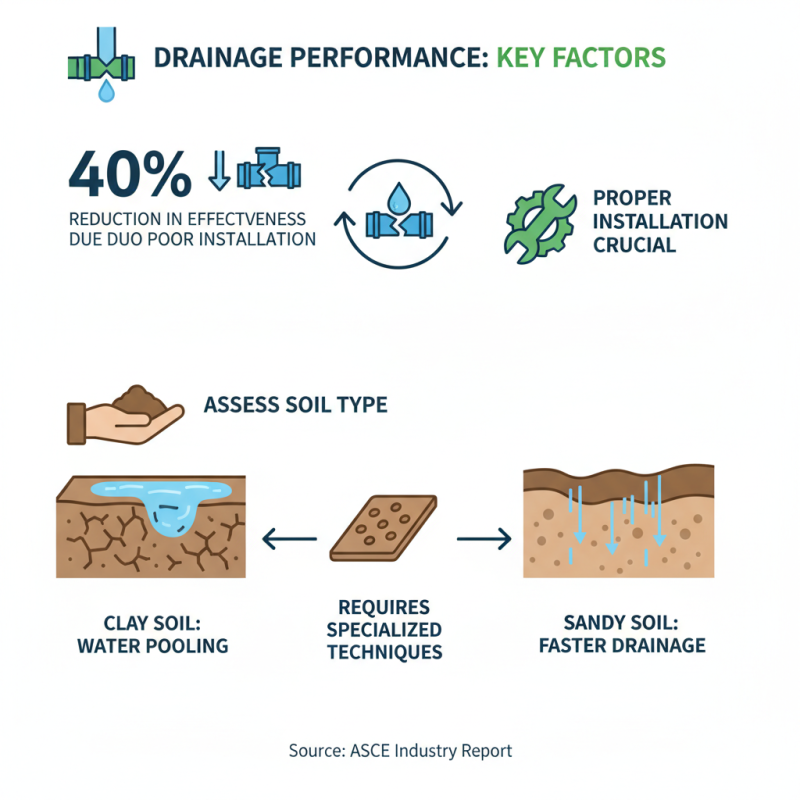
Effective drainage performance relies heavily on proper installation practices. According to a recent industry report by the American Society of Civil Engineers, poorly installed drainage systems can lead to a 40% reduction in effectiveness. It’s essential to assess the soil type before installation. Different soils retain water differently, impacting how the drainage board functions. For instance, clay-rich soils can cause significant water pooling, which emphasizes the need for specialized techniques.
Another critical factor is ensuring the slope during installation. A minimum slope of 1% is often recommended. This tiny gradient ensures water flows without obstruction. If the slope is inadequate, water can accumulate, causing problems over time. Further, incorporating a geotextile fabric can prevent soil from clogging the drainage system. However, not all installations use this, leading to potential long-term failures. The cost of redoing poor installations can be considerable, sometimes exceeding 15% of the initial project budget.
Maintenance is also a crucial aspect that gets overlooked. Regular checks on the drainage board and surrounding area can help identify issues before they escalate. Ironically, the more advanced the system, sometimes, the less attention it receives. Ignoring simple plumbing issues can lead to costly repairs later on. In conclusion, paying attention to installation and maintenance can optimize drainage performance significantly.
Future Trends in Drainage Board Technology and Innovation
The drainage board industry is evolving rapidly. Innovations focus on enhancing water management efficiency. According to a 2023 industry report, improper drainage accounts for 30% of structural failures in construction. This highlights the need for effective solutions.
New materials are key in this transformation. Lightweight composites now dominate, improving installation and longevity. Research indicates that advanced drainage boards can reduce water pooling by 40% in urban areas. However, there are challenges. Many existing products cannot adapt to harsh climates. This limitation calls for further innovation.
Smart technology integration is another trend. Sensors embedded in drainage systems can monitor performance in real time. A report showed that 85% of professionals are interested in such advancements. Despite the potential, adoption remains slow. Cost concerns and lack of awareness hinder progress in the industry.