2026 Best Geogrid Fabric for Global Suppliers and Buyers?
As the construction industry evolves, the demand for Geogrid Fabric continues to rise. Experts highlight its importance in providing stability and support in soil reinforcement applications. Dr. Anne Carter, a renowned geotechnical engineer, emphasizes, "Selecting the right geogrid fabric can significantly impact project longevity."
Geogrid Fabric plays a crucial role in various infrastructure projects, such as roadways and embankments. The material enhances load distribution, reducing settlement and deformation. This unique attribute helps project managers make informed decisions. However, the variety of options can be overwhelming. Not all fabrics meet the high standards required for durability and performance.
As suppliers and buyers gather insights for 2026, understanding market trends is essential. Challenges in sourcing high-quality Geogrid Fabric exist. It's vital to consider factors like environmental conditions and project specifications. Experts caution against rushing decisions. A thoughtful approach will ensure that selected fabrics align with long-term structural needs.

2026 Overview of Geogrid Fabrics in the Global Market
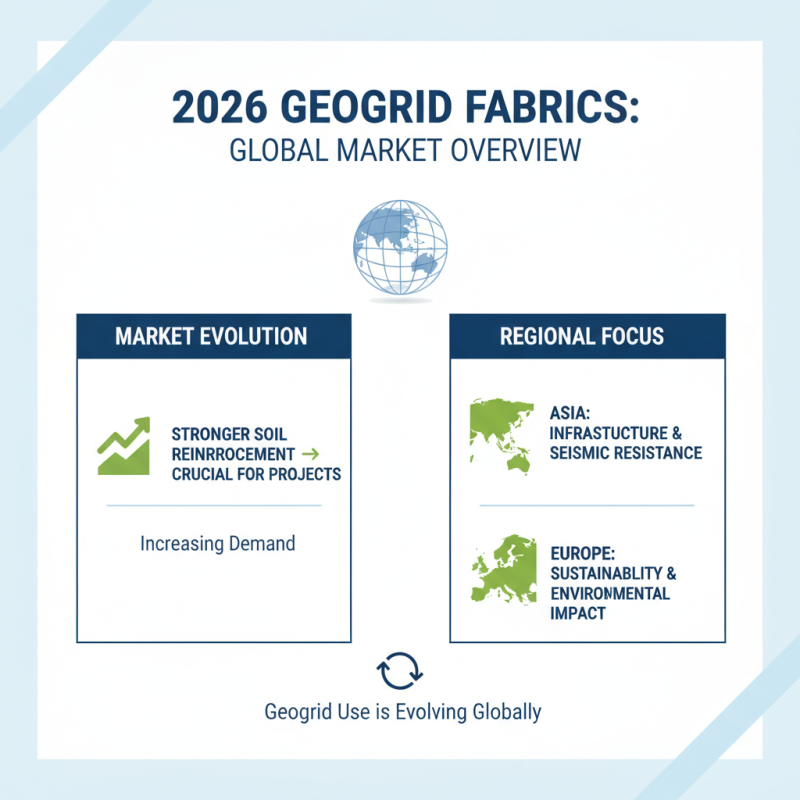
The global market for geogrid fabrics is evolving. As projects demand stronger soil reinforcement, geogrid use becomes crucial. Different regions have varying needs. For instance, infrastructure projects in Asia look for materials that can withstand seismic activities. In contrast, European markets focus on sustainability and environmental impact.
Tips: Always consider local regulations. They can dictate geometric designs and material properties. Understanding these standards is key to successful procurement.
Innovation plays a significant role in this sector. New manufacturing techniques enhance durability and performance. They create opportunities for better geogrid performance in challenging soil conditions. Buyers should pay attention to these advancements. However, expecting a one-size-fits-all solution can be misleading. Assessing specific project needs is vital.
Tips: Engage with technical experts. Their insights can guide sourcing decisions. Also, think critically about your project's lifecycle. This can lead to more sustainable choices.
Key Characteristics of High-Quality Geogrid Fabrics
When selecting geogrid fabrics, understanding key characteristics is essential. High-quality geogrids enhance soil stability and improve load distribution. They typically feature high tensile strength and durability, standing up to harsh environmental conditions. Strong materials resist deformation over time, which is vital for long-term projects.
Another important aspect is their compatibility with different soil types. Good geogrids often feature high flexibility, allowing for easier installation in varied terrains. This adaptability helps maintain performance in dynamic environments. Additionally, effective drainage properties can prevent water accumulation, preserving structural integrity. However, not all products meet these criteria, leading to potential failures.
Pricing can vary significantly, and the cheapest options may lack essential qualities. Buyers must balance cost against performance. Researching materials and testing samples can prevent costly mistakes. Stakeholders should not overlook these details to ensure project success.
2026 Best Geogrid Fabric Performance Characteristics
Top Global Suppliers of Geogrid Fabrics in 2026
Geogrid fabrics play a crucial role in various engineering projects, including soil reinforcement and road construction. In 2026, we can expect a wide variety of suppliers offering innovative solutions. Geogrid fabrics reduce soil movement and enhance stability. This is especially important in areas facing heavy loads or unstable ground.
When choosing a supplier, consider their experience and reputation. A reliable supplier should provide a history of successful projects. Researching customer reviews can give insights into product performance and service. Not all suppliers will meet your expectations, so careful selection is vital.
Tips: Always request samples. This allows for a practical assessment before committing to bulk orders. Comparing different geogrid fabrics can highlight unique features that meet your project needs. Focus on the technical specifications as they will directly impact the longevity and effectiveness of your project. Reflect on your choices and gauge the future impact of the materials selected. The right supplier can make the difference between project success and failure.
Comparative Analysis of Geogrid Fabrics for Buyers
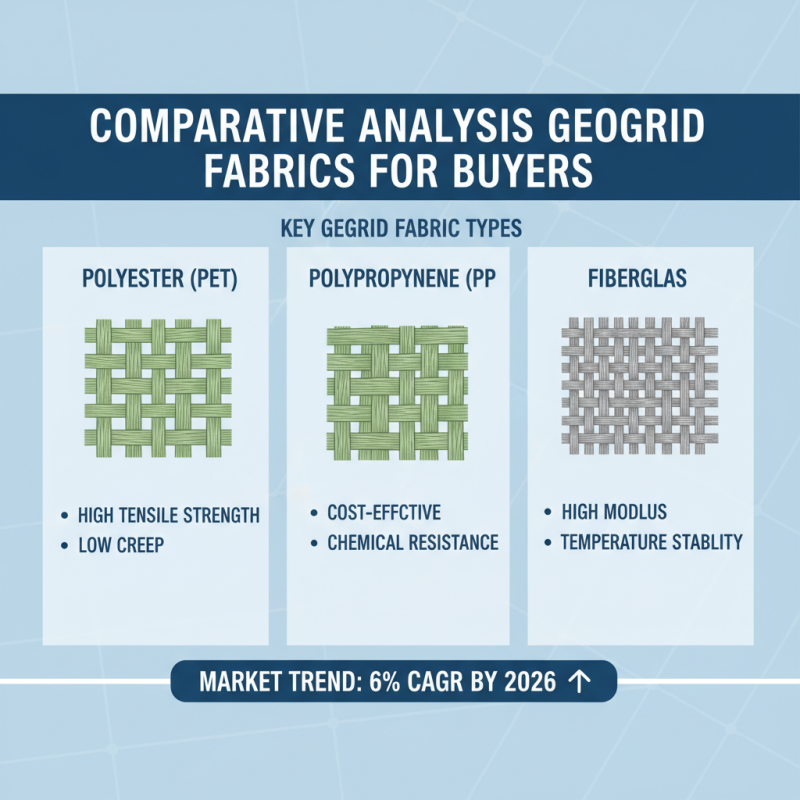
The market for geogrid fabrics is evolving rapidly. A recent industry report predicts a compound annual growth rate (CAGR) of around 6% by 2026. For buyers, understanding the differences among materials is crucial. Polyester, polypropylene, and fiberglass geogrids each have unique properties, affecting their functionality in various applications. Polyester geogrids are known for their high tensile strength, while polypropylene options offer cost-effectiveness.
In a comparative analysis, pullout resistance is a significant factor. A study indicates that polypropylene geogrids exhibit less pullout strength compared to polyester. For infrastructure projects, this can be limiting. On the other hand, fiberglass geogrids show remarkable durability yet may compromise flexibility. Buyers must weigh these trade-offs based on project requirements. Quality geogrid selection requires not only material knowledge but also an understanding of local soil conditions. Advanced testing protocols are essential to ensure reliability.
Sustainable sourcing is another consideration gaining traction. Reports show that environmentally friendly materials are increasingly in demand. However, sourcing practices can complicate supply chains. Not every supplier can guarantee eco-friendly materials without higher costs. Buyers might find themselves balancing budget constraints and sustainability efforts. The pursuit of optimal geogrid fabric will not only enhance project outcomes but also contribute to long-term environmental goals.
Future Trends in Geogrid Fabric Technology and Applications
The future of geogrid fabric technology is promising, driven by innovations that enhance performance, durability, and application versatility. Recent reports estimate a market growth rate of about 6.7% through 2026, indicating increasing demand for advanced geogrid solutions. These fabrics play a crucial role in construction, soil stabilization, and erosion control.
Emerging trends point to the integration of smart materials and geosynthetics. Researchers note that materials with embedded sensors can offer real-time monitoring of structural integrity. This innovation provides valuable data for project managers and engineers. Enhanced design techniques are also evolving, focusing on optimizing tensile strength while reducing environmental impact. The push for sustainability has led to recycled materials being incorporated into geogrid manufacturing processes.
While technological advancements are significant, challenges remain. The cost of implementing new technologies can be high, limiting accessibility for some suppliers and small-scale projects. Additionally, not all regions are equipped with the knowledge to apply these innovative solutions effectively. Continuous education and awareness are essential for maximizing the benefits of geogrid technology.
2026 Best Geogrid Fabric for Global Suppliers and Buyers
| Dimension |
Material Type |
Strength Rating (kN/m) |
Application |
Color |
| 30x30 cm |
Polyester |
20 |
Road Construction |
Black |
| 40x40 cm |
Fiberglass |
25 |
Soil Reinforcement |
Green |
| 50x50 cm |
Polypropylene |
30 |
Landslide Prevention |
Gray |
| 60x60 cm |
Composite |
40 |
Base Stabilization |
Blue |