Top Benefits of Geofabric Bidim for Erosion Control and Landscaping Projects
In the realm of erosion control and landscaping, the significance of innovative solutions cannot be overstated. One such solution that has garnered attention is Geofabric Bidim, a versatile geotextile that plays a pivotal role in various environmental projects. According to Dr. Emily Carter, a leading expert in soil stabilization techniques, “The use of Geofabric Bidim not only enhances soil integrity but also promotes sustainable landscaping practices.” This insight underscores the dual benefit of utilizing such materials in both construction and ecological preservation efforts.
Geofabric Bidim provides essential support in preventing soil erosion, facilitating vegetation growth, and maintaining landscape aesthetics. By leveraging its unique properties, professionals in the construction and landscaping industries can effectively manage water runoff while ensuring that soil remains intact. With increasing environmental concerns, the strategic implementation of Geofabric Bidim in erosion control measures offers a proactive approach to landscape management, contributing to healthier ecosystems. As we explore the top benefits of this innovative material, it becomes clear that Geofabric Bidim is instrumental in achieving both functional and sustainable outcomes in various projects.

Key Features of Geofabric Bidim for Erosion Control
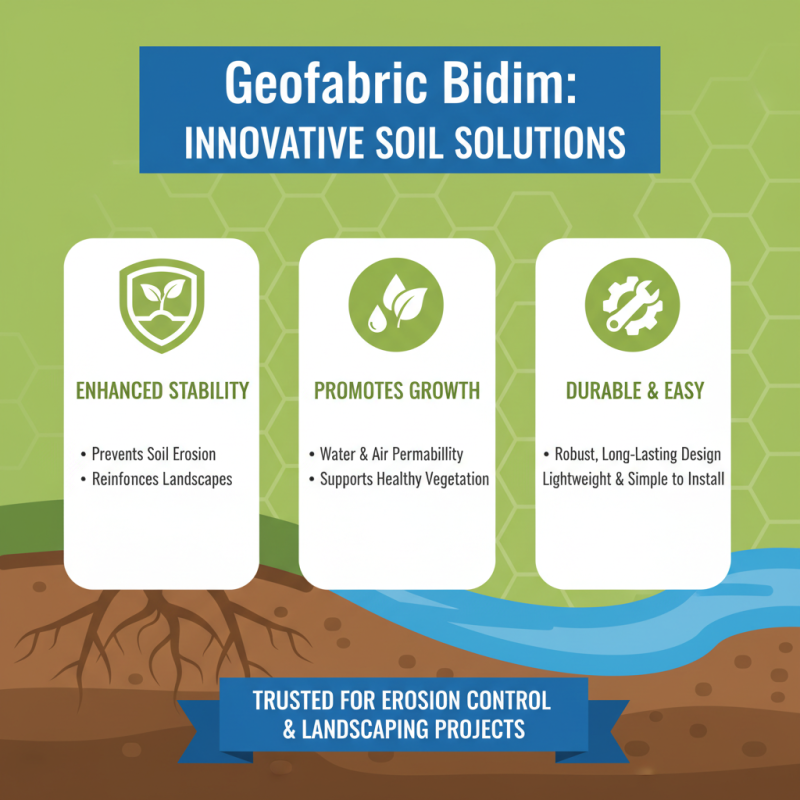
Geofabric Bidim is an innovative solution for erosion control and landscaping projects, designed to enhance soil stability and promote vegetation growth. One of the key features of Geofabric Bidim is its durability, which comes from its robust design that withstands harsh environmental conditions. This geofabric acts as a barrier, preventing soil movement while allowing water and air to penetrate, thus supporting plant life. Its lightweight nature makes it easy to handle and install, enabling efficient project execution without compromising performance.
When working with Geofabric Bidim, it’s essential to ensure proper installation for optimal effectiveness. Here are a few tips: first, always clean the site to remove debris and loose soil before laying down the fabric. This will improve the contact between the fabric and soil, enhancing its holding capacity. Secondly, overlap the edges of each fabric section to eliminate any gaps where soil could escape. This is crucial in maintaining the integrity of your erosion control measures.
Another remarkable feature of Geofabric Bidim is its ability to promote vegetation growth through its permeable structure. The fabric supports root establishment while controlling weed growth, creating a sustainable landscaping solution. To maximize these benefits, consider planting native species that are well-adapted to the local environment. This not only strengthens the soil more effectively but also supports local biodiversity.
Advantages of Using Geofabric Bidim in Landscaping Projects
Geofabric Bidim has emerged as a leading solution in landscaping projects, particularly due to its ability to control erosion effectively. According to a report by the International Erosion Control Association, over 70% of landscapes are subject to some form of erosion, significantly impacting soil stability and vegetation health. By incorporating geofabrics like Bidim, professionals in landscaping can not only mitigate these risks but also enhance soil retention. This non-woven fabric is designed to facilitate water movement while simultaneously preventing soil loss, making it ideal for various terrains, especially in areas susceptible to run-off.
Moreover, the benefits of geofabric extend beyond just erosion control. A study from the National Association of Landscape Professionals highlights that using geofabric can reduce maintenance costs by up to 30% due to its durability and effectiveness in weed suppression. By acting as a barrier, it helps maintain soil quality and reduces the need for chemical herbicides that can harm the local ecosystem. The material is lightweight, easy to install, and can be used for various projects, from residential gardens to larger commercial landscapes, making it a versatile choice for landscape architects and designers.
How Geofabric Bidim Improves Soil Stability and Prevents Erosion
Geofabric Bidim plays a crucial role in enhancing soil stability and preventing erosion in various landscaping and construction projects. Its unique fabric structure acts as a barrier that reinforces the soil, allowing it to maintain its integrity under varying weather conditions. By providing immediate support to the topsoil, Geofabric Bidim reduces the risk of displacement caused by heavy rainfall, wind, or human activity. As a result, it helps establish a solid foundation for vegetation, which further anchors the soil and improves overall landscape health.
In addition to its protective qualities, Geofabric Bidim contributes to effective drainage management. The fabric allows water to permeate while filtering out sediment and debris, preventing clogging and promoting healthy water flow. This is particularly important in areas prone to erosion, as it minimizes surface runoff and reduces the likelihood of gully formation. By incorporating Geofabric Bidim in soil management practices, landscapers can ensure a sustainable environment that not only protects against soil erosion but also fosters the growth of lush greenery and resilient ecosystems.
Benefits of Geofabric Bidim for Erosion Control and Landscaping Projects
The chart above illustrates the top benefits of using Geofabric Bidim in erosion control and landscaping projects, highlighting its significant role in enhancing soil stability, preventing erosion, facilitating water drainage, being cost-effective, and contributing to environmental protection.
Applications of Geofabric Bidim in Different Landscaping Scenarios
Geofabric Bidim has emerged as a pivotal solution in the realm of erosion control and landscaping, demonstrating versatility across various applications. In areas prone to soil erosion, such as sloped landscapes, the use of geofabric can significantly enhance soil retention while allowing water infiltration. According to industry reports, implementing geofabric in these contexts can reduce soil erosion rates by up to 75%, demonstrating its effectiveness in stabilizing the environment and promoting sustainable landscaping practices.
In more urban landscaping scenarios, geofabric Bidim can be used in creating effective drainage systems. This material helps prevent sediment buildup and controls stormwater runoff, which is crucial for maintaining both the integrity of urban infrastructure and the health of nearby ecosystems. A study from the Environmental Protection Agency indicates that proper erosion control measures using geofabric can improve water quality in runoff by reducing the amount of turbidity and pollutants entering waterways. Furthermore, applying geofabric in garden beds and pathways not only minimizes weed growth but also enhances the aesthetic appeal of landscaped areas, providing a functional yet visually pleasing solution.
Top Benefits of Geofabric Bidim for Erosion Control and Landscaping Projects
| Application |
Benefits |
Recommended Usage |
| Erosion Control |
Prevents soil erosion by stabilizing the ground. |
On slopes and riverbanks. |
| Drainage Solutions |
Enhances water drainage and prevents waterlogging. |
Around flower beds and landscaped areas. |
| Landscape Stabilization |
Holds soil in place and promotes healthy plant growth. |
Under turf and in garden beds. |
| Sediment Control |
Reduces sediment runoff and preserves water quality. |
In construction sites and near water bodies. |
| Wildlife Habitat Enhancement |
Creates suitable environments for habitats. |
In natural reserves and parks. |
Environmental Benefits of Using Geofabric Bidim in Construction
Geofabric Bidim plays a crucial role in erosion control and landscaping, significantly contributing to environmental sustainability in construction projects. According to a report by the International Erosion Control Association, approximately 80% of construction sites experience erosion, which can lead to sediment runoff into waterways. Utilizing geofabric helps to stabilize soil, reduce erosion rates, and maintain the integrity of sensitive landscapes. By acting as a barrier, geofabric minimizes soil loss while promoting natural vegetation regrowth, thereby enhancing biodiversity.
Moreover, integrating geofabric into landscaping projects can help manage stormwater effectively. The U.S. Environmental Protection Agency indicates that strategic use of erosion control fabrics can decrease surface runoff by up to 50%, thereby reducing the risk of flooding and improving water quality. This not only protects local ecosystems but also enhances community resilience against climate change impacts.
**Tip:** When planning a landscaping or construction project, consider conducting a soil analysis to determine the specific needs of your site. This will allow you to select the appropriate type of geofabric that complements your environmental goals.
**Tip:** Regular maintenance is key. Monitor your installation periodically for signs of wear or erosion, and reapply additional geofabric as necessary to ensure long-lasting protection and functionality.